
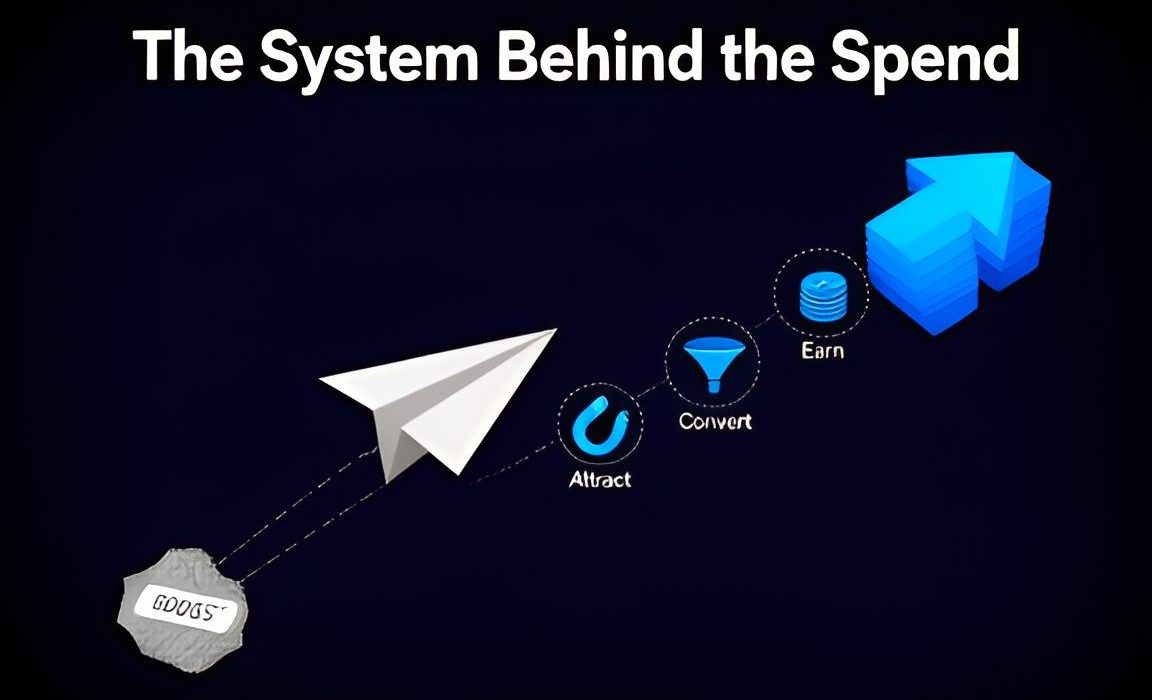
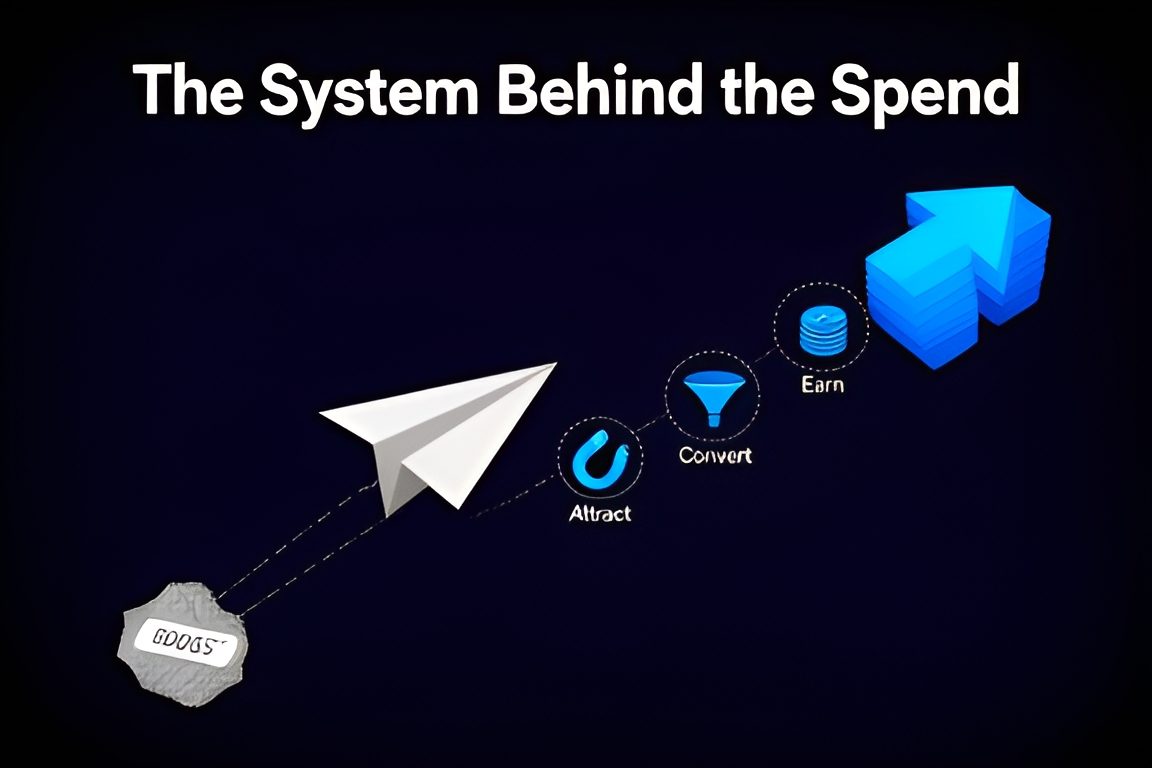
₦15,000 gone in four days. One boosted tweet, zero sales, and a business owner swearing Twitter ads “don’t work for Nigerians.” I’ve had this exact conversation more times than I can count, and the pattern is always the same: someone boosts a random post, waits for alerts that never come, then closes the tab and tells everyone who’ll listen that Twitter ads are a waste of money. They’re not. The absence of a system behind the spend is the real problem.
Here’s what I’ve learned running paid campaigns for Nigerian businesses since Twitter ads became accessible to local advertisers: the platform doesn’t care how much you spend if nothing behind the ad is built to convert. A naira spent on reach without a plan is a naira spent on nothing. The question most people ask is “do Twitter ads work?” That’s the wrong question. It’s unanswerable because it skips the part that actually matters.
The right question is: what has to be true before Twitter ads work? That’s where the A.C.E. framework comes in — Attract, Convert, Earn. Each stage either sets your ad spend up to perform or quietly sabotages it before the campaign even launches.
I’ve watched this play out with real clients. Chinedu was stuck for months before we fixed his targeting. Blessing had followers but no sales until her conversion pathway was rebuilt. Tunde needed a campaign set up right the first time, under pressure, with no room for trial and error. Their results weren’t luck. They were sequence.
This section breaks down exactly what has to be in place — before, during, and after the click — for Twitter ads to actually earn you money in the Nigerian market.
Why 'Twitter Ads Don't Work' Is the Wrong Conclusion
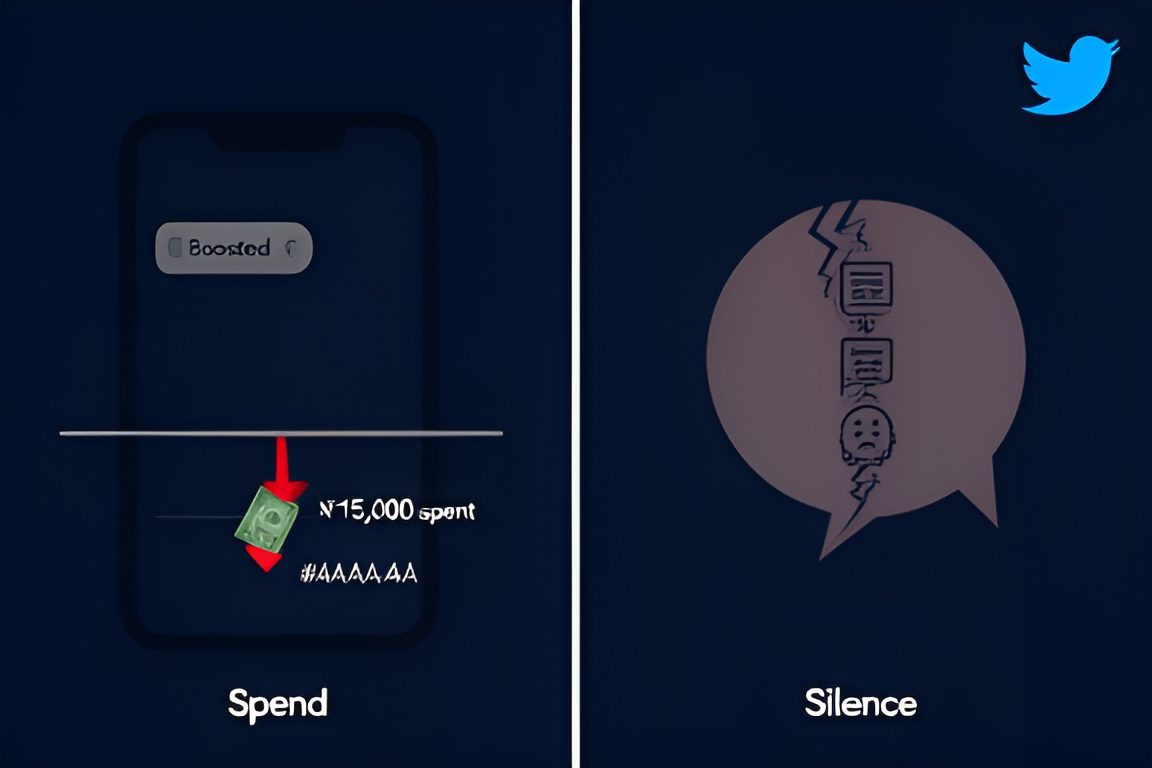
Here’s what actually happens. A business owner boosts a tweet, puts ₦5,000 behind it, checks back in two days, sees three likes and zero sales, and closes the tab muttering that Twitter ads are a scam. That’s not a Twitter problem. That’s a sequencing problem. Ads were never built to fix a broken foundation — they’re built to accelerate one that already works.
I’ve sat across from enough business owners to know the real question isn’t “do Twitter ads work in Nigeria.” The real question is: what has to be true before you spend a single naira on them? And almost nobody asks that question, because nobody sold them on the idea that there’s an order of operations. They were sold urgency. Boost now, worry later.
The Mistake Underneath the Mistake
The surface mistake is boosting a random post with no targeting. Everyone can see that one. The mistake underneath it — the one that actually costs money — is treating ad spend as a replacement for strategy instead of an amplifier of it. If your offer isn’t clear, your ad clarifies nothing. If your landing page doesn’t convert cold traffic, your ad just pays to generate confused visitors. If your targeting is set to “everyone in Nigeria interested in business,” you’re not running an ad, you’re running a donation.
This is where the A.C.E. framework earns its place. Attract, Convert, Earn — in that order, not randomly. Twitter ads live almost entirely in the Attract phase. Their job is to put the right eyes on your business. That’s it. They were never built to close sales, build trust, or explain your offer. When Chinedu’s Attract phase got fixed — proper targeting, a message built for the specific audience segment instead of a generic pitch — he started getting real engagement within days after being stuck for months. Same platform he’d been using all along. Different sequence.
Most people run Twitter ads backwards. They attract traffic before they’ve built anything worth converting it into. They spend on visibility while their bio, their pinned tweet, and their offer are still saying three different things. The platform shows them exactly what they asked for — attention — and then blames the platform when attention doesn’t magically become money.
If you want the full breakdown of how each phase of the A.C.E. framework applies specifically to social platforms in Nigeria, we cover it in detail on our blog. But the short version is this: fix the sequence before you fix the spend.
Why It Keeps Happening
It keeps happening because the advice circulating in Nigerian business WhatsApp groups and Twitter Spaces treats ads like a magic button instead of a system. Someone boosts a tweet, spends ₦5,000, waits two days, sees no sales, and screenshots the “low results” page as proof the platform is broken. Nobody told them Twitter ads were never designed to work alone.
Three things keep this cycle going. First, bad advice from people selling “ad secrets” who’ve never run a campaign past the awareness stage themselves. Second, the wrong tools — targeting the whole of Nigeria with no interest filters, no custom audience, no retargeting pixel, because nobody showed them how Twitter’s ad manager actually segments people. Third, and the biggest one: missing fundamentals. There’s no offer worth clicking on, no landing page built to convert, no reason for a stranger to trust a business they just discovered mid-scroll.
The mindset gap nobody talks about
Most business owners approach ads the same way they approach lottery tickets — pay small, hope big. I’ve sat with clients who wanted sales from an ad campaign that had no clear audience, no tested creative, and no funnel behind it. That’s not a Twitter ads problem. That’s an Attract-stage problem, and it’s fixable the moment you stop treating the spend as the strategy.
When we rebuilt the targeting and messaging for one client, Chinedu, the shift was immediate. He’d been stuck for months running the same unfocused approach. Once the Attract phase was corrected — right audience, right hook, right timing — he started getting real engagement within days.
Platform changes don’t help either. Twitter’s ad algorithm has shifted targeting options and pricing models multiple times in the last two years, and most self-taught advertisers are still running campaigns built for a version of the platform that no longer exists. If your setup hasn’t been audited recently, you’re not fighting the market. You’re fighting an outdated map.
The Fix: Running Twitter Ads Through the A.C.E. Framework
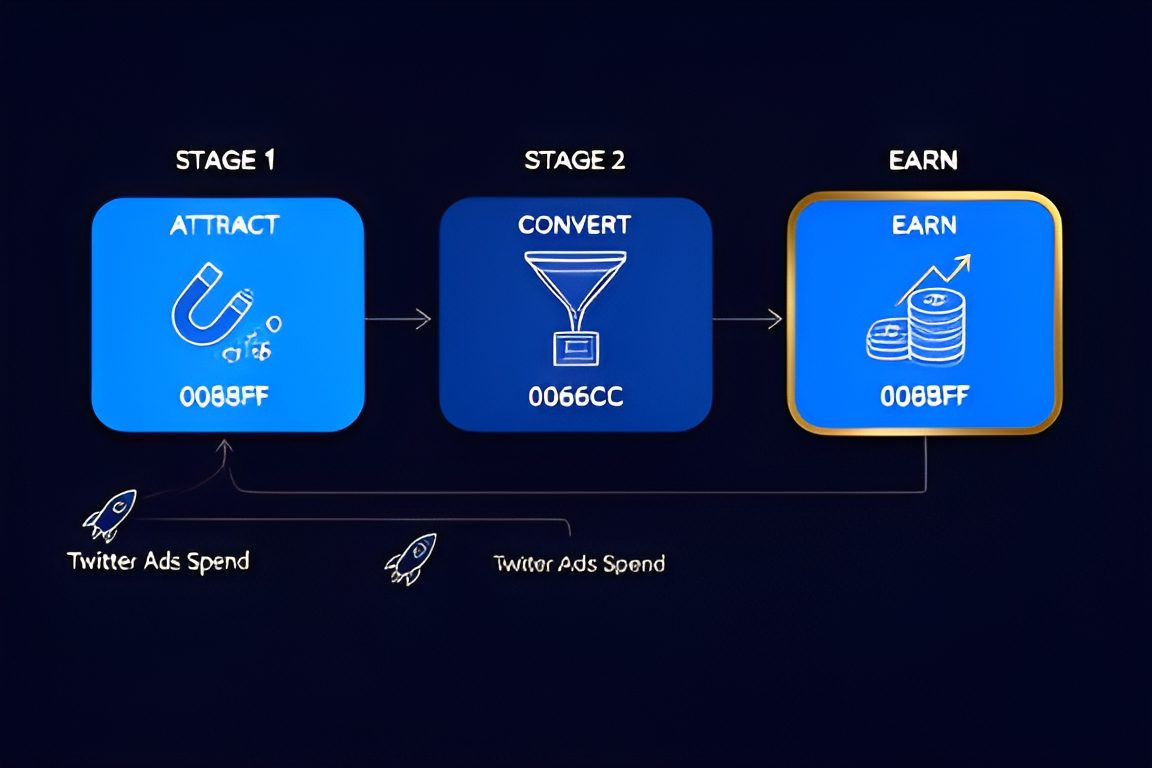
Definition: The A.C.E. Monetization Framework is a three-stage system — Attract, Convert, Earn — that turns Twitter ads from a random spend into a predictable sales channel by fixing targeting, trust, and offer structure before a single naira hits the ad manager.
Here’s the real question nobody asks before boosting a tweet: what has to be true for this ad to make money? Not “will Twitter ads work.” That’s the wrong question, and I’ve answered it for enough business owners to know it leads nowhere. The right question breaks the campaign into three stages, and if any one of them is broken, the ad spend is wasted no matter how good the targeting looks on paper. This is the system I run every client through at Ace Digitals Global before we touch a single ad.
Attract: Getting the Right Eyes on the Ad
Attract is about precision, not reach. Twitter’s targeting lets you narrow by interest, by follower lookalikes, by location down to Lagos or Port Harcourt specifically — and most people ignore all of it and just boost to “everyone in Nigeria.” That’s not attraction, that’s noise. I had a client, Chinedu, who’d been stuck for months posting into silence. We didn’t change what he was selling. We fixed who the ad was shown to and rewrote the hook in the first line of the tweet, because on Twitter the first line is the ad — everything after is just the body copy nobody scrolls to if the hook misses.
Chinedu started getting real engagement within days.
That’s the Attract stage doing its job. Not sales yet — visibility to the right people. Confusing the two is where most Twitter ad budgets quietly die.
Convert: Turning Clicks Into Leads
Convert is where the ad spend either pays for itself or disappears. A Twitter ad can get 2,000 clicks and still produce zero sales if it dumps traffic onto a bio link, a WhatsApp number with no context, or a landing page that takes nine seconds to load on a mid-range Android phone. Blessing had followers before she had a single conversion — the traffic was never the issue.
Blessing’s page finally started converting.
What changed wasn’t the ad. It was the offer structure behind it — a clear landing page, a specific promise, and a next step that didn’t require five extra taps to complete. That’s Convert: traffic meets a system built to catch it, not a hope that people figure it out themselves.
Earn: Making the Ad Pay for Itself and Then Some
Earn is the stage people skip straight to without building the first two, which is backwards. Once Attract and Convert are solid, Twitter ads become a repeatable income lever — fund a product launch, drive affiliate signups, or push traffic straight into a service funnel. Tunde needed his campaign set up correctly the first time, with no room for a slow, trial-and-error rollout eating his budget.
Tunde got speed and professionalism, exactly as promised.
Set up right from day one, the ad spend stops being an expense and starts behaving like an investment with a return you can actually track. That’s the full system — not a checklist, a sequence where each stage pays forward into the next. Read more on this in How to Monetize Social Media in Nigeria in 2026.
How to Set Up Twitter Ads That Actually Convert: A Step-by-Step Breakdown
Definition: A converting Twitter Ads campaign is one built in sequence — audience research, offer clarity, creative that stops the scroll, a landing destination built to capture the click, and a tracking setup that tells you what happened after the spend. Skip any step and the ad becomes a donation to X Corp.
Here’s the exact sequence I walk clients through. Not theory. This is the order I use when I’m setting up a campaign from zero, whether the budget is ₦15,000 or ₦500,000.
1. Define the one action before you touch the Ads Manager
Before you open X Ads Manager, decide what a stranger scrolling their timeline should do after seeing your ad. Click to WhatsApp? Visit a landing page? Follow your page? Pick one. Nigerian business owners routinely run ads that try to sell, build brand awareness, and collect followers all at once — and the algorithm doesn’t know which signal to optimize for, so it optimizes for none of them well.
2. Build the audience before you build the ad
X Ads Manager lets you target by keywords people have tweeted, accounts they follow, and interests tied to their activity. If you sell skincare in Lagos, target followers of Nigerian beauty influencers, keywords like “oily skin” or “pimple cream,” and set location to Lagos with a 15–20km radius if you’re doing local delivery. This is where Chinedu’s account turned around. He’d been boosting posts with zero targeting for months and nothing moved. Once we rebuilt his audience logic inside the Attract stage of the A.C.E. framework,
he started getting real engagement within days.
Same product. Same budget range. Different targeting discipline.
3. Write the ad copy like you’re interrupting a timeline, not writing a brochure
You have about one second before the thumb keeps scrolling. Lead with the outcome or the tension, not your business name. “Still ironing clothes with charcoal in 2025?” beats “ABC Electronics presents our new iron” every time. Keep it under 100 characters if you can — X still rewards brevity even with the longer character limit now available.
4. Set a budget you can actually afford to lose while testing
Start with ₦10,000–₦20,000 as a test budget over 3–5 days, not spread thin across multiple ad groups. X Ads Manager’s minimum daily spend is low, but testing with ₦2,000 a day across five audiences tells you nothing. Concentrate the budget on two audience variations maximum and let the data accumulate.
5. Point the click somewhere built to receive it
This is where most Nigerian campaigns quietly die. The ad gets clicks, but it sends traffic to a bio link, a WhatsApp number with no script, or a homepage with no offer. Blessing had this exact problem — thousands of followers, decent engagement, zero naira coming in. The traffic wasn’t the issue. The destination was. Once we rebuilt her offer structure and gave her a conversion pathway inside the Convert stage,
her page finally started converting.
Paid traffic behaves the same way organic traffic does — it exposes whatever is broken on the other end of the click.
6. Install tracking before day one, not after you’re confused
Add the X Pixel to your website or landing page before launch. Without it, you’re guessing which ad, audience, or creative drove the result. Pair it with UTM parameters if you’re sending traffic to a blog or store page so you can cross-reference inside Google Analytics.
7. Review on day 3, not day 1
X’s algorithm needs a learning window. Checking performance six hours in and panicking is how people kill ads that were about to turn a corner. Tunde came to us needing a campaign relaunched fast after a botched setup elsewhere, and what he valued most wasn’t just the strategy — it was that we didn’t waste his time second-guessing the sequence. He got
speed and professionalism, exactly as promised.
Set it up right the first time, then give it room to work.
Each step feeds the next. Skip the audience work and your creative talks to the wrong people. Skip the landing page fix and your targeting was wasted. Run the sequence in full, and the question stops being whether Twitter ads work.
What Nobody Tells You About Twitter Ads Spend in Nigeria
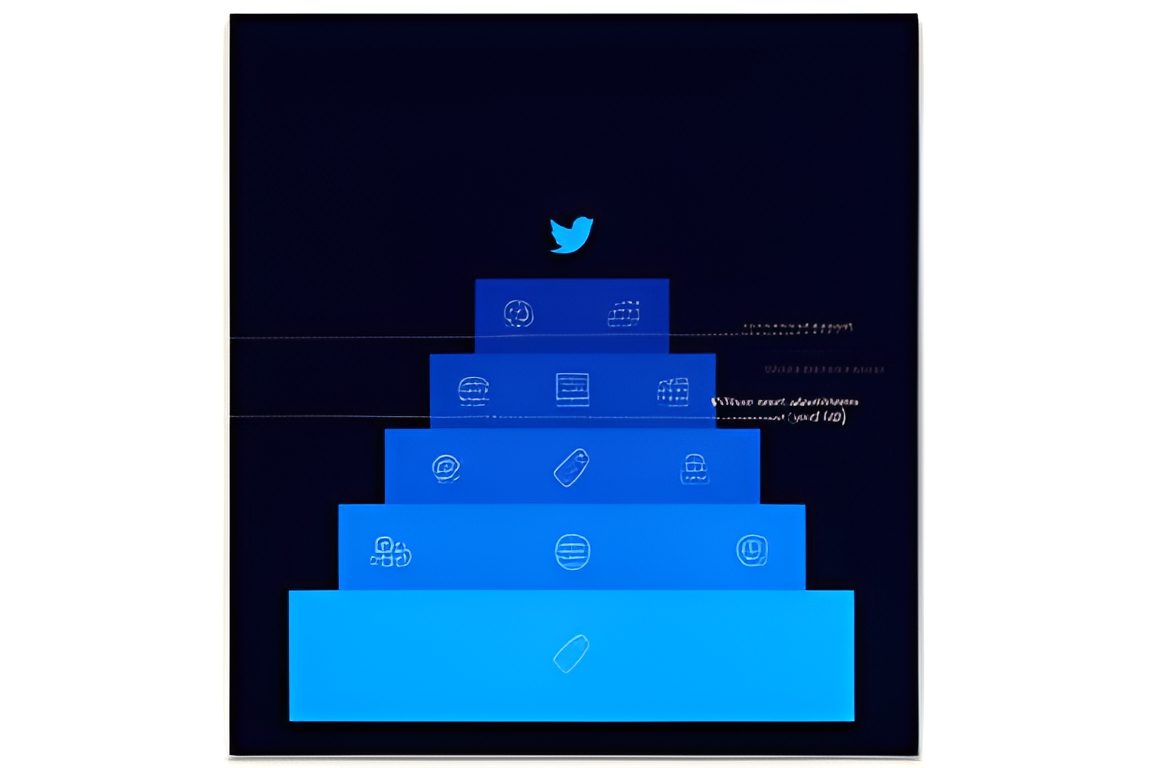
Definition: Ad spend efficiency on Twitter (X) describes how much of a Nigerian business’s advertising budget actually reaches a buying decision, versus how much is lost to poor targeting, weak offers, or missing conversion paths before the campaign even launches.
Here’s the pattern I’ve watched repeat across almost every account I’ve audited: the businesses spending the least per sale are rarely the ones with the biggest budgets. They’re the ones who fixed their sequence before they fixed their spend. A business running ₦15,000 a week with a tight A.C.E. structure will consistently outperform one running ₦150,000 with no structure at all. That’s not a motivational line. That’s what the numbers show every time I’ve compared the two side by side.
The Counterintuitive Truth: More Budget Makes a Broken System Worse, Not Better
Most people assume underperforming ads need more money thrown at them. The opposite is true. If your targeting is wrong and your landing page doesn’t convert, increasing budget just means you’re paying more to confirm the same failure, faster. I’ve seen business owners triple their ad spend after a slow week, hoping volume would fix what strategy couldn’t. It never does. It just empties the account quicker.
This is exactly where the Attract stage proved itself with Chinedu. He wasn’t short on budget. He was short on precision. Once we rebuilt his targeting and visibility setup inside the A.C.E. framework, the shift wasn’t gradual.
Chinedu started getting real engagement within days, after months of being stuck.
That’s the data point most people miss: the fix wasn’t more naira, it was correct sequencing. Attract pulls the right eyes. Convert turns those eyes into leads. Earn makes sure the leads turn into money sitting in your account, not just numbers in your Twitter Ads dashboard.
Traffic Without a Pathway Is Just an Expensive Vanity Metric
Blessing’s situation makes the second half of this truth hard to ignore. She had followers. She had reach. What she didn’t have was anywhere for that attention to go.
Blessing’s page finally started converting once the offer structure and conversion pathway were rebuilt.
That’s the part a basic Twitter Ads tutorial never tells you: clicks are not conversions, and impressions are not income. A campaign can hit every vanity metric Twitter shows you and still produce zero sales, because the platform was never the missing piece. The pathway was.
If you’re ready to see how this plays out for your specific business, get in touch and we’ll look at where your current setup is leaking money.
The Mistakes That Quietly Kill Your Twitter Ads Budget
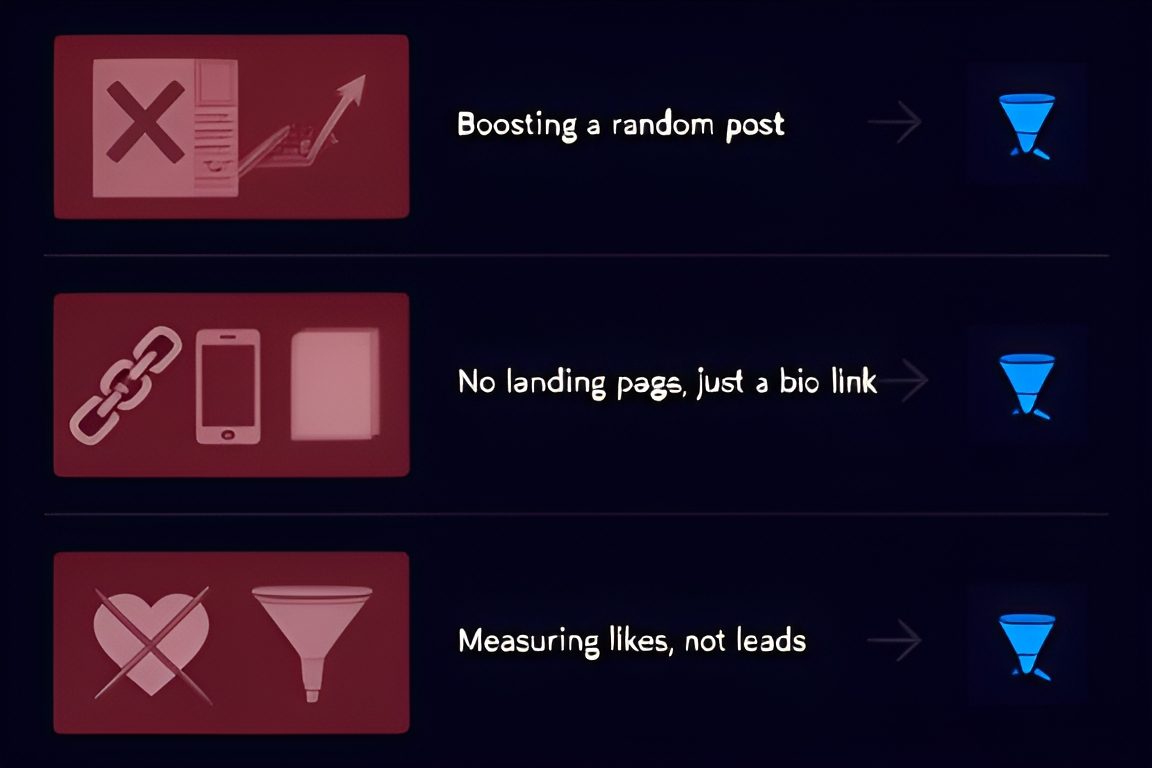
Here’s the answer first: most Twitter ads campaigns in Nigeria fail because of five repeatable mistakes, not bad luck or a broken platform. I’ve audited enough ad accounts to spot the same errors wearing different outfits. Fix these and your spend starts working the way it’s supposed to.
Mistake 1: Boosting a Tweet Instead of Building a Campaign
Boosting feels like advertising, but it isn’t. It’s just paying Twitter to show more people a post that wasn’t built to convert anyone. A real campaign starts with an objective — awareness, website clicks, leads — and every setting after that follows from it. Decide what the ad needs to do before you spend a single naira pushing it.
Mistake 2: Targeting Everyone Because ‘Everyone Needs This’
Broad targeting burns budget fast because Twitter spends your money finding people who will never buy, right alongside the few who might. Narrow targeting using interests, follower look-alikes, and location (Lagos, Abuja, Port Harcourt, wherever your buyers actually sit) fixes this immediately. Chinedu’s account proved it — he’d been stuck for months with ads nobody engaged with, and once we corrected his targeting as part of the Attract phase, he started getting real engagement within days.
Mistake 3: Sending Clicks to a Page With No Next Step
An ad that performs well but leads to a bio link, a bare homepage, or nothing at all is money spent proving people are interested and then losing them anyway. Every click needs somewhere specific to land — a landing page, a WhatsApp link, an offer. Without that, you’re funding Twitter’s revenue, not yours.
Mistake 4: Setting the Campaign Up Once and Walking Away
Twitter ads need adjustment in the first 48–72 hours — checking cost per result, pausing weak ad sets, doubling down on what’s working. Business owners who launch and disappear usually come back to a drained budget and no explanation. Tunde needed his campaign set up correctly and monitored properly from day one, with no room for guesswork, and that’s exactly what he got — speed and professionalism, exactly as promised.
Mistake 5: Judging the Whole Platform After One Failed Attempt
One campaign with no system behind it isn’t evidence that Twitter ads don’t work in Nigeria. It’s evidence that one attempt was missing a strategy. Before writing off the platform, run it once through the full How to Monetize Social Media in Nigeria in 2026 approach and see what changes.
The Proof: What Happens When Twitter Ads Finally Get a System Behind Them
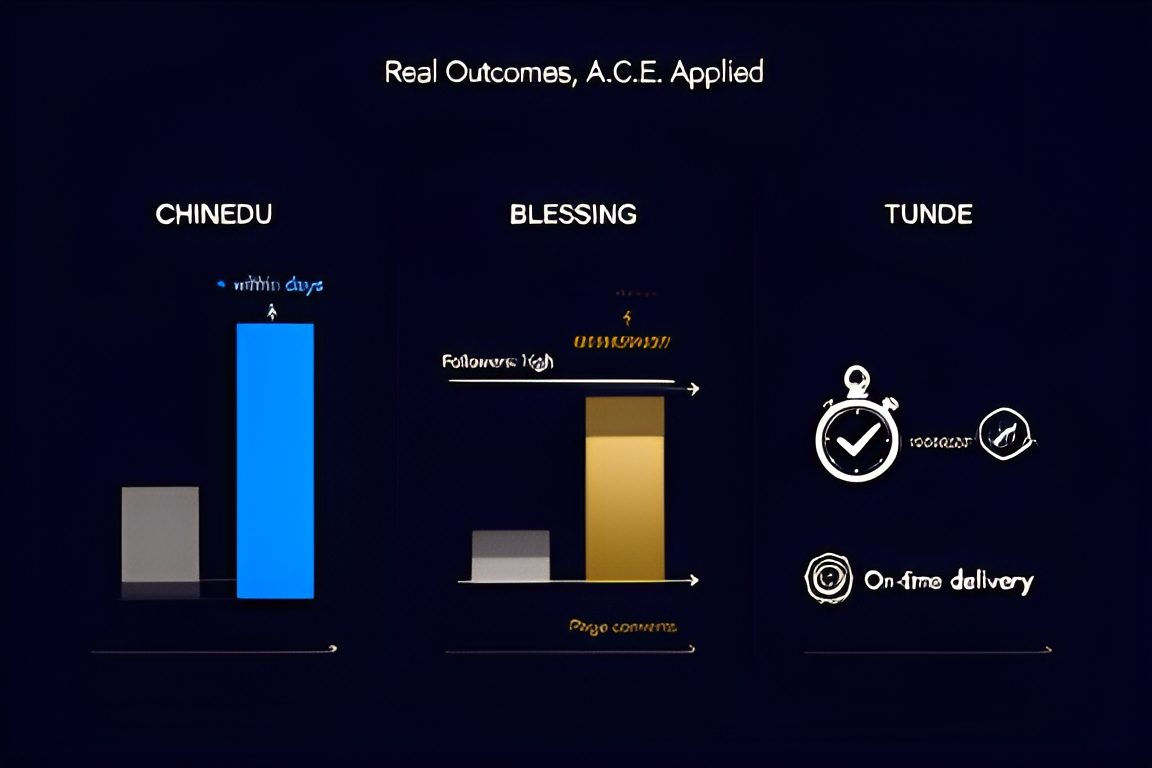
Here’s what I can tell you after running Twitter ad campaigns for Nigerian businesses across different niches: the results show up fast once the system is right, and they don’t show up at all when it isn’t. Three clients. Three different starting points. Same framework. Same outcome — spend that finally did its job.
Chinedu came to us stuck. Months of posting, boosting, and watching numbers that refused to move. The problem wasn’t his offer or his product. It was that his Attract phase was broken — wrong targeting, no SEO foundation under the content, ads running to an audience that had no reason to care. Once we rebuilt that layer first, before touching ad spend again, things shifted fast.
“Started getting real engagement within days.”
That’s not a lucky boost. That’s what happens when the right people see the ad instead of a wide, expensive guess.
Blessing’s situation was different, and more common than most business owners want to admit. She had followers. She had traffic, some of it paid for. What she didn’t have was anywhere for that traffic to go that actually asked for the sale. Her Convert phase — the landing page, the offer structure, the trust signals — simply didn’t exist. Traffic was arriving and leaving with nothing to do.
“My page finally started converting.”
That line came after we rebuilt her offer structure and gave her traffic a clear next step. Not more ad spend. A reason to buy.
Tunde needed something different entirely: speed, and no mistakes on setup. Nigerian ad accounts get flagged, naira-to-dollar billing causes delays, and a campaign built wrong the first time wastes a week of spend before anyone notices. He got his campaign live, correctly structured, without the usual back-and-forth.
“Speed and professionalism, exactly as promised.”
Three different problems. One framework. If you want the full breakdown of what’s working for Nigerian businesses on social platforms right now, How to Monetize Social Media in Nigeria in 2026 is worth your time.
This Could Be Your Story Next
Chinedu, Blessing and Tunde didn't start with an advantage. They started with a system. Let's build yours — message us today and tell us where your business is stuck.
FAQ: What Nigerians Actually Ask About Twitter Ads
Do Twitter ads work in Nigeria?
Yes, but only when there’s a system behind the spend. Twitter ads work the same way everywhere: they put your message in front of the right eyes, nothing more. If your targeting is off, your offer is weak, or you have no landing page, the ad can be flawless and still return zero sales. The platform isn’t the variable. Your setup is.
How much does it cost to run Twitter ads in Nigeria?
You can start testing with as little as ₦10,000–₦15,000, though most campaigns need at least ₦30,000–₦50,000 to generate enough data to optimize properly. Spending less than that usually means you’re guessing, not testing. The real cost isn’t the ad spend, it’s running that budget without a conversion pathway behind it. That’s how business owners burn ₦50,000 in a week and walk away blaming the platform.
Why are my Twitter ads not converting into sales?
In most cases, it’s not the ad, it’s what happens after someone clicks it. If you’re sending paid traffic to a bio link, a crowded DM inbox, or no landing page at all, you’re losing people at the exact moment they were ready to buy. Blessing had followers and visibility for months before a sale came in. Once we rebuilt her offer structure and gave her a clear conversion pathway, her page finally started converting. The traffic was never the issue.
What’s the biggest mistake people make with Twitter ads?
Boosting a random post and calling it a campaign. A boosted tweet has no targeting logic, no funnel, and no follow-up sequence, it’s just visibility with no destination. The second biggest mistake is setting up the campaign correctly but moving so slowly that the moment passes. Tunde needed speed and professionalism when his campaign window was tight, and he got exactly that, which is often the difference between an ad that converts and one that just spends.
Should I boost a post or run a proper ad campaign through Twitter Ads Manager?
Run a proper campaign through Ads Manager if you want data you can act on. Boosting gives you reach with almost no control over targeting, objective, or tracking. Ads Manager lets you choose a real objective, from Attract-stage awareness to Convert-stage website clicks, and see exactly what’s working. If you’ve only ever boosted posts, that’s likely the first thing we’d fix.
How long before Twitter ads start showing results?
Visibility and engagement can shift within days once targeting is fixed, Chinedu saw real engagement within days after his Attract-stage setup was corrected. Sales conversions take longer, usually two to four weeks of consistent spend and testing, because the Convert stage needs time to prove which offer and landing page combination works. Anyone promising overnight sales from a cold campaign is selling you a story, not a strategy.
How do I get started with Ace Digitals Global?
Message DigitalUche directly on WhatsApp and tell us exactly where your Twitter ads are stuck, whether it’s targeting, offer, or conversion. From there, you can look through our full range of services to see how the A.C.E. framework applies to your specific business. No generic pitch, just a straight answer on what to fix first.
Twitter Ads Were Never the Problem
Here’s the only thing you need to carry away from this: Twitter ads don’t fail, setups without a system do. Boosting a random post and hoping for sales isn’t a strategy, it’s a donation to Twitter’s revenue. The moment you run your spend through Attract, Convert, and Earn, the same platform you wrote off starts paying you back.
Chinedu didn’t get real engagement within days because Twitter changed. He got it because the targeting and visibility problems got fixed first. Blessing didn’t start converting because she spent more. She converted because the offer and the pathway after the click finally matched the traffic. Tunde didn’t get a clean campaign launch by luck. He got speed and professionalism because the setup was done right the first time, not rebuilt after the budget was already gone.
That’s the pattern. Every naira you’ve burned on ads that didn’t convert wasn’t proof the platform is broken. It was proof there was no system behind the spend. And every day you wait to fix that is another day you’re paying for clicks that lead nowhere.
You don’t need a bigger budget. You need the right order of operations. Read How to Monetize Social Media in Nigeria in 2026 for the bigger picture, browse our blog for more breakdowns like this one, or go straight to our full range of services and let’s fix your setup before your next kobo leaves your pocket.
Twitter ads don’t owe you sales. Your system does.
Ready to Stop Guessing?
You don't need another course or another random tactic. You need the A.C.E. system applied to your business. One conversation is all it takes to start.
Want This Implemented for Your Business?
Book a free 30-minute strategy call with DigitalUche — no obligation, just real advice.

Uchenna Richard — DigitalUche
Founder & CEO — Ace Digitals Global
Lagos-based digital marketing strategist helping Nigerian entrepreneurs build websites and run ads that actually convert. Follow on Instagram @DigitalUche.