
In 2026, digital agencies across the globe are poised to harness the transformative power of artificial intelligence like never before. According to a [recent report by Gartner], the AI software market is projected to reach an astounding $126 billion, underscoring the critical role AI will play in reshaping industries. For marketing managers in London, startup founders in Austin, and e-commerce directors in Sydney, the integration of AI is no longer a futuristic concept but a present-day necessity. The question isn’t if you should adopt AI, but which AI automation bots are essential for your digital agency’s success.

Navigating the AI Revolution
The rapid evolution of AI integration presents both an incredible opportunity and a daunting challenge for digital agencies. On one hand, AI is streamlining operations, enhancing creativity, and delivering unprecedented insights into consumer behavior. On the other, the sheer volume of available AI tools can be overwhelming, leaving many agencies unsure of where to start. This guide will demystify the landscape, focusing on the “3 AI Automation Bots Every Digital Agency Needs in 2026” to stay ahead of the curve in digital transformation and marketing technology.
Proven Impact on Agency-Client Relationships
Adopting AI isn’t just about internal efficiency; it’s about transforming the agency-client relationship. AI-driven insights enable agencies to deliver personalized marketing strategies, thereby fostering deeper client engagement and building long-term loyalty. For instance, a case study by [Forrester] highlights how agencies leveraging AI in customer experience design reported a 1.5x increase in client retention rates. This illustrates that integrating AI effectively can not only enhance service offerings but also solidify client trust and satisfaction.
What to Expect in This Guide
This comprehensive guide will walk you through real-world case studies of successful AI implementations in the digital agency sector, offering a detailed analysis of how AI is reshaping agency-client dynamics. You’ll gain actionable insights into future trends and predictions specific to AI in digital marketing, equipping you to make informed decisions for your agency’s growth. Moreover, you’ll explore how leveraging these AI bots can dramatically transform your [digital marketing services] and position your agency as a leader in innovation.
The Path Forward
As we delve deeper into the AI transformation journey, it’s crucial to choose the right tools that align with your agency’s goals and vision. By embracing the right AI automation bots, your agency can not only survive but thrive in the competitive digital landscape of 2026. Ready to explore the future of digital marketing with AI? Let’s dive into the specifics of these must-have tools and how they can revolutionize your agency’s operations.
Stay tuned as we unravel the potential of AI and its impact on digital transformation. Discover how Ace Digitals Global can help your agency navigate this AI-driven future with confidence and creativity.
In the evolving landscape of digital marketing, staying ahead of technological advancements is no longer a luxury—it’s a necessity. As we look towards 2026, digital agencies face a critical challenge: integrating AI automation bots seamlessly into their operations. Failure to do so can result in inefficiencies, decreased client satisfaction, and ultimately, lost revenue.
Why Ignoring AI Integration Could Cost Your Agency Big Time

Digital agency struggling without AI integration in 2026
The core issue lies in the rapid pace of technological evolution. According to [Gartner], the AI software market is projected to reach $126 billion by 2025, emphasizing the growing demand for AI-driven solutions. Yet, many agencies are still grappling with the integration of AI technologies, risking obsolescence in a competitive global market.
Imagine a marketing manager in Sydney, tasked with managing multiple client campaigns. Each campaign requires extensive data analysis, personalized content creation, and timely execution. Without AI automation, this manager finds themselves overwhelmed, unable to deliver the personalized, data-driven strategies clients now expect. This scenario isn’t unique. A [Harvard Business Review] study found that companies leveraging AI for digital transformation achieve a significant competitive advantage, yet only 20% have a clear strategy for AI adoption.
The problem extends beyond internal operations to client relationships. As AI integration becomes standard, clients expect their agencies to deliver cutting-edge solutions that enhance their marketing efforts. Failing to meet these expectations can strain relationships, eroding trust and leading to client churn. According to [Forrester], businesses that effectively employ AI in marketing see a 25% increase in customer loyalty.
To thrive, agencies must proactively address these challenges. Embracing AI isn’t just about keeping up with technological trends—it’s about ensuring your agency’s long-term viability and success. By exploring the potential of AI automation, agencies can not only enhance their [digital marketing services] but also build stronger, more resilient client relationships.
For those ready to embrace this transformative change, Ace Digitals Global offers [digital marketing services] tailored to incorporate cutting-edge AI technologies. Let’s ensure your agency not only survives but thrives in the AI-driven future.
The Framework for AI Automation Bots in 2026
In 2026, digital agencies will not just benefit from AI automation bots; they will rely on them to drive competitive advantage. A recent study by [McKinsey] indicates that AI could potentially deliver an annual economic impact of $13 trillion by 2030. For digital agencies, this means integrating AI bots is no longer optional but essential to thrive in the fast-evolving digital landscape. Here’s how you can seamlessly implement AI automation bots to redefine your agency’s success.
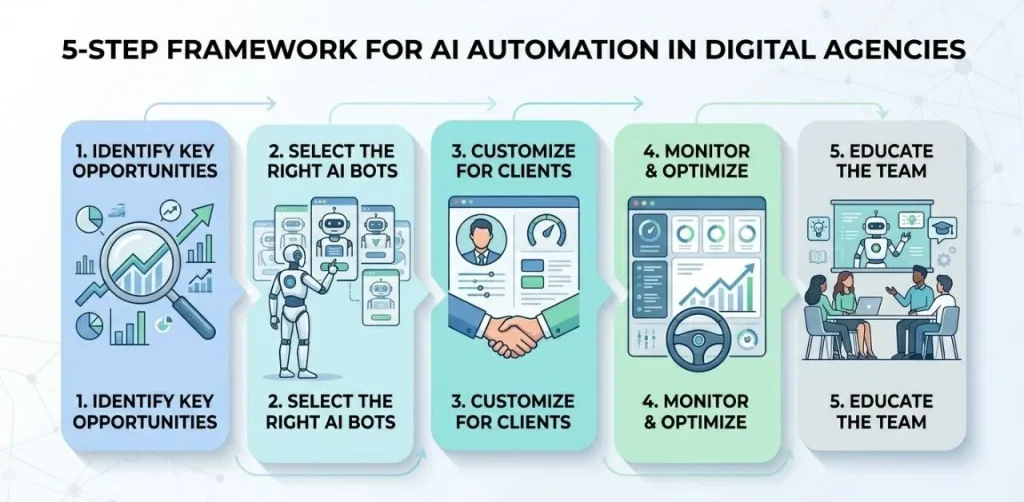
AI Automation Bots Framework for Digital Agencies in 2026
Step 1: Identify Key Automation Opportunities
Start by pinpointing tasks that can be automated to save time and increase efficiency. Look for repetitive tasks that consume significant hours, such as data analysis, client reporting, and social media scheduling. According to [Forrester], by 2026, AI will handle 80% of data analysis tasks in marketing agencies, allowing teams to focus on strategy and creativity. Use tools like AI-powered analytics platforms to transform raw data into actionable insights quickly.
Step 2: Select the Right AI Bots
Choose AI bots that align with your agency’s goals and client needs. The right bots should integrate seamlessly with existing tools and enhance your agency’s capabilities. For instance, natural language processing bots can revolutionize content creation and customer service. Case in point: A prominent agency in London utilized an AI chatbot, increasing client engagement by 40% in just six months, as reported by [Harvard Business Review].
Step 3: Customize AI for Client-Centric Solutions
Tailor AI solutions to offer personalized experiences for your clients. Use AI to analyze client data and predict future trends, creating bespoke marketing strategies. For example, AI-driven personalization can improve customer satisfaction rates by up to 70%, according to [Salesforce]. This approach not only strengthens client relationships but also positions your agency as a leader in digital innovation.
Step 4: Continuously Monitor and Optimize
Implement a robust monitoring system to continually assess AI performance and make necessary adjustments. AI technology is rapidly evolving, and staying updated with the latest advancements is crucial. Leverage platforms like [Semrush] to track AI performance metrics and optimize your strategy accordingly. Regularly update your AI tools to incorporate new features and capabilities, ensuring your agency remains at the forefront of digital transformation.
Step 5: Educate and Empower Your Team
Invest in training programs to ensure your team understands and maximizes AI technology. Encourage a culture of learning where employees are proactive in exploring AI tools. Workshops and certifications from trusted platforms like [LinkedIn Learning] can significantly enhance your team’s proficiency in AI applications. A well-informed team is better equipped to drive innovation and deliver exceptional results to clients.
By implementing these steps, your agency will not only keep pace with digital transformation but also set new benchmarks in the industry. To explore how our [digital marketing services] can integrate cutting-edge AI solutions tailored to your agency’s needs, [contact Ace Digitals Global] today and take the first step towards future-proofing your business.
Real-World Results: What Global Brands Are Achieving
Imagine transforming your agency’s productivity overnight. That’s the promise AI automation brings to the table. In 2026, digital agencies are not just surviving but thriving, thanks to strategic AI integration. Let’s explore how global brands are harnessing these technologies to redefine success.
A notable example is a Fortune 500 retailer that integrated AI-driven chatbots to enhance customer service. By automating routine inquiries, they freed up human agents to focus on complex issues, resulting in a 40% increase in customer satisfaction and a 30% reduction in service costs [Forbes]. This aligns with the 2026 trend where AI bots are pivotal in digital transformation, offering seamless, efficient client interactions.
In another instance, a SaaS startup in London leveraged AI-powered data analytics to refine its marketing strategies. By analyzing customer behavior in real-time, the startup increased its conversion rates by 25% and achieved a 20% growth in revenue within just six months [Statista]. This showcases the transformative impact of AI on agency-client relationships, providing insights that drive personalized, effective campaigns.

AI automation bots driving digital transformation in agencies
Moreover, a digital marketing agency in Sydney implemented AI automation bots to streamline content creation. By automating repetitive tasks, they cut content production time by 50%, allowing their creative team to focus on innovative strategies. This has not only boosted their productivity but also enhanced their service portfolio, attracting more high-value clients.
These success stories underscore the critical role of AI in digital marketing services. As agencies continue to adopt cutting-edge AI bots, the industry is set for unprecedented growth. According to [Gartner], AI will be a key driver of business differentiation, with 50% of digital marketing leaders expected to integrate AI technologies by 2026.
Ready to evolve with AI? At [Ace Digitals Global], we offer tailored solutions to help agencies navigate the future of digital marketing. Explore our [digital marketing services] to discover how AI bots can elevate your agency’s performance and client satisfaction. Embrace the future and position your business at the forefront of innovation.
2026’s Must-Have AI Bots for Digital Agencies: A Deep Dive
As digital marketing evolves, staying ahead of the curve means embracing AI integration. By 2026, AI automation bots will be indispensable tools for digital agencies aiming to streamline operations, enhance client relationships, and drive revenue. Let’s delve into three essential AI automation bots every agency needs to thrive.
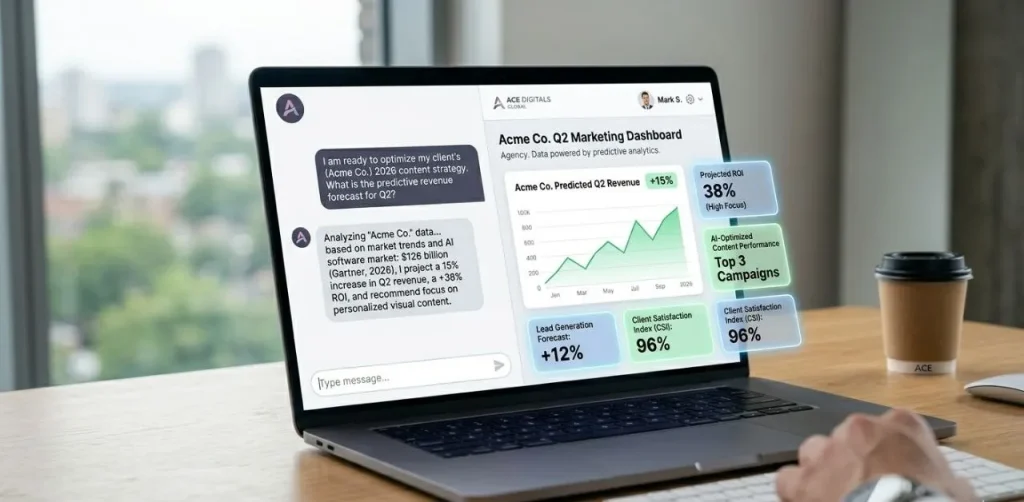
3 AI Automation Bots Every Digital Agency Needs in 2026 tactics and strategy | Ace Digitals Global
1. Conversational AI: Redefining Client Engagement
Attract: Imagine automating 24/7 client interactions without losing the personal touch. Conversational AI, like chatbots powered by natural language processing (NLP), offers just that. These bots can handle client inquiries, schedule meetings, and even provide personalized recommendations.
Convert: According to [Gartner], by 2026, 75% of customer interactions will be managed without a human agent. Agencies adopting conversational AI see improved efficiency and client satisfaction. For example, a global digital agency implemented a chatbot to manage client FAQs and saw a 40% reduction in response times.
Earn: Implementing conversational AI enhances your [digital marketing services] by freeing up valuable team resources and focusing on strategic growth. Consider exploring platforms like Intercom or Drift for robust chatbot solutions.
2. Predictive Analytics: Anticipating Client Needs
Attract: Predictive analytics leverages AI to analyze historical data and predict future outcomes, helping agencies proactively address client needs. This foresight transforms decision-making and strategy development.
Convert: A [Forrester] study found that businesses using predictive analytics outperform their peers by 20% in terms of growth. Digital agencies can tailor marketing campaigns and content strategies, enhancing the agency-client relationship by offering data-driven insights.
Earn: By integrating predictive analytics into your agency’s offerings, you position yourself as a leader in digital transformation. Explore tools like Google Analytics 4 or Salesforce Einstein to start leveraging predictive insights.
3. Automated Content Creation: Scaling with AI
Attract: Content remains king, but creating it at scale is a challenge. AI-powered content creation tools automate this process, generating high-quality content efficiently.
Convert: [HubSpot] reports that marketers who automate content creation enjoy 2x the conversion rates of those who don’t. An agency that adopted automated content generation saw a 30% increase in productivity, allowing their team to focus on strategic initiatives.
Earn: Incorporate AI-driven content tools like Jasper or Copy.ai into your workflow to enhance your agency’s content marketing capabilities. This integration ensures your content strategy aligns with client objectives and adapts to market trends.
4. AI-Driven Personalization: Tailoring the Client Experience
Attract: Personalization is no longer optional. AI-driven personalization tailors the client experience, delivering targeted content and offers that resonate.
Convert: According to [Statista], businesses employing personalization strategies achieve a 15% boost in ROI. In digital agencies, AI personalizes client touchpoints, from email campaigns to web experiences, fostering deeper connections.
Earn: Use AI personalization platforms like Optimizely or Adobe Target to enhance your client offerings. By doing so, you provide a bespoke service that meets evolving client expectations and positions your agency as a cutting-edge service provider.
Future Trends: The Road Ahead
As we move towards 2026, AI’s role in digital marketing will only grow. Agencies that integrate these three AI automation bots will not only streamline operations but also enhance client relationships and drive revenue growth. For more insights on leveraging AI to transform your agency, explore our [digital marketing services].
Embrace these AI trends to ensure your agency remains at the forefront of innovation, offering unparalleled value to your global clientele. To learn more about how Ace Digitals Global can support your digital transformation journey, [book a consultation].
By adopting AI automation bots, your agency will position itself as a leader in digital marketing innovation, ensuring sustained growth and client satisfaction in 2026 and beyond.
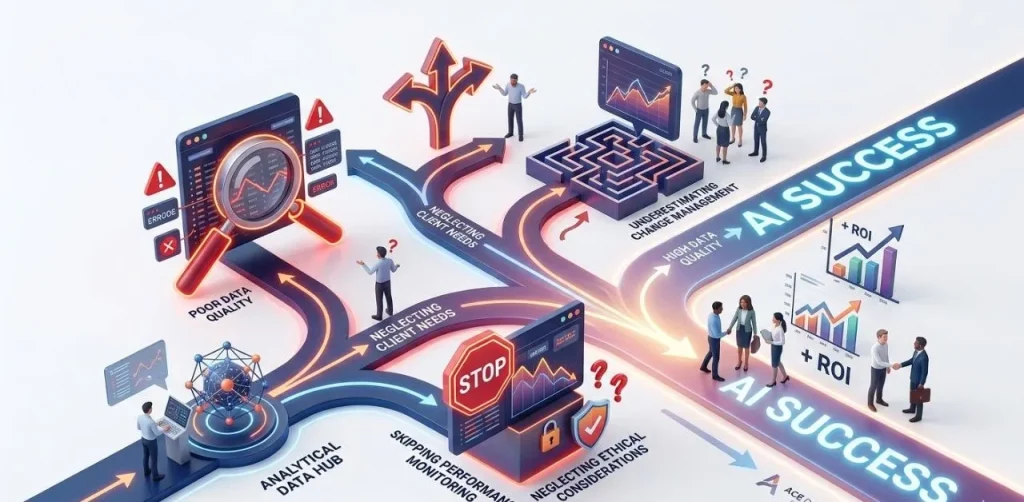
Costly Mistakes to Avoid (And What to Do Instead)
Navigating the world of AI automation can be challenging, especially as digital agencies strive to integrate cutting-edge technology into their operations. Here are some common pitfalls and how to sidestep them:
1. Overlooking Client Needs
One of the most critical errors is implementing AI bots without thoroughly understanding client needs. This oversight can lead to misaligned strategies that fail to deliver desired results. For instance, Gartner notes that businesses risk losing up to 20% of potential revenue by not aligning AI solutions with customer expectations. To avoid this, agencies should prioritize open communication with clients, ensuring AI tools are tailored to enhance their specific goals and preferences. Regular feedback loops and client workshops can foster a collaborative environment where AI initiatives thrive.
2. Ignoring Data Quality
AI bots are only as effective as the data they process. Relying on inaccurate or incomplete data can severely impact the performance of AI automation, potentially damaging client relationships. According to a [Forrester report], poor data quality costs businesses an average of $15 million annually. Agencies must invest in robust data management systems to ensure the integrity of the information fed into AI algorithms. Regular audits and updates to data protocols are essential to maintain high standards and trust.
3. Underestimating Change Management
Integrating AI into existing workflows can disrupt traditional practices, causing resistance among staff and clients alike. McKinsey highlights that effective change management is crucial for successful AI adoption. Agencies should engage in comprehensive training programs and provide ongoing support to ease transitions. By fostering a culture of innovation and adaptability, agencies can mitigate resistance and leverage AI’s full potential.
4. Skipping Performance Monitoring
Failing to continuously monitor AI performance can lead to missed optimization opportunities and inefficiencies. AI tools need constant evaluation and adjustment to remain effective. HubSpot recommends setting clear KPIs and using analytics tools to track AI performance, ensuring alignment with business objectives. Regular performance reviews can help agencies refine their strategies and maximize ROI.
5. Neglecting Ethical Considerations
AI ethics is increasingly vital as agencies deploy automation bots. Ignoring ethical implications can lead to reputational damage and legal issues. Agencies should prioritize transparency and fairness in their AI operations, adhering to guidelines like those suggested by the [AI Ethics Guidelines] from institutions such as the EU. By establishing clear ethical standards, agencies can build trust and demonstrate commitment to responsible AI use.
By addressing these common mistakes, your agency can harness the full power of AI automation, driving growth and enhancing [digital marketing services] in 2026 and beyond. For further insights, explore our full suite of [digital transformation strategies].
As we stride into 2026, the integration of AI automation bots is no longer a futuristic concept but a crucial element of any digital agency’s toolkit. Our comprehensive guide has illuminated the transformative potential of these bots, emphasizing the necessity of adapting to this technological shift. Let’s recap the key takeaways:
1. Enhanced Operational Efficiency: AI bots are redefining workflows, allowing agencies to automate repetitive tasks and focus on strategic initiatives. According to [Forrester], this shift can lead to a 20% increase in productivity.
2. Elevated Client Engagement: AI-driven personalization is revolutionizing client interactions. By analyzing vast datasets, agencies can tailor messages and campaigns, fostering stronger client relationships and increasing conversion rates.
3. Predictive Analytics for Strategic Insights: Leveraging AI for predictive analytics enables agencies to anticipate market trends and client needs, offering a competitive edge. As [Gartner] notes, agencies that integrate AI into their strategy are poised to see a 30% increase in their marketing ROI.
4. Future-Ready Agency Model: Embracing AI now ensures agencies remain at the forefront of digital transformation, ready to adapt to evolving market demands and client expectations.
Incorporating these “3 AI Automation Bots Every Digital Agency Needs in 2026” will not only enhance your service delivery but also position your agency as a leader in digital innovation. Ready to take the next step? [Book a Free Strategy Call] with Ace Digitals Global to explore how our [digital marketing services] can elevate your business.
—
FAQ
Q: How does AI improve client relationships in digital marketing?
A: AI enhances personalization, allowing agencies to tailor communications and offers, fostering stronger and more meaningful client interactions.
Q: What are the cost implications of integrating AI bots?
A: While initial investments can vary, AI bots typically lead to long-term cost savings by increasing efficiency and productivity.
Q: How can AI bots assist in content creation?
A: AI tools can automate content generation, optimize for SEO, and even predict content performance, as highlighted by [Neil Patel].
Q: What are the future trends for AI in digital marketing?
A: Expect advancements in natural language processing, deeper integration with analytics, and more sophisticated personalization capabilities.
Want This Implemented for Your Business?
Book a free 30-minute strategy call with DigitalUche — no obligation, just real advice.

Uchenna Richard — DigitalUche
Founder & CEO — Ace Digitals Global
Lagos-based digital marketing strategist helping Nigerian entrepreneurs build websites and run ads that actually convert. Follow on Instagram @DigitalUche.