

I’ve Built Dozens of Nigerian Websites — These Are the Only Hosting Providers I Recommend
Let me tell you what happens in the first ten seconds when someone finds your business online. They click your link. Their phone loads. And if your site takes more than three seconds — they’re gone. Back to Google. Straight to your competitor. You never even knew they came.
That’s not a content problem. That’s not a design problem. That’s a hosting problem — and it’s the most overlooked issue I see across Nigerian business websites, every single week.
I’ve built websites for fashion retailers, logistics companies, law firms, pharmacies, and service businesses across Lagos and beyond. And one thing I’ve learned is this: you can have the best design, the sharpest copy, and a flawless offer — but if your hosting is wrong, none of it matters. Your site will be slow. It’ll go down at the worst times. Your customers will move on before you even know there was a problem.
Choosing the best hosting providers for Nigerian businesses isn’t about picking the cheapest option on Jumia or going with whatever your web guy recommended three years ago. It’s about understanding what your site actually needs — speed infrastructure, uptime guarantees, SSL, support you can reach — and matching that to a provider that delivers it consistently.
In this post, I’m sharing exactly what I’ve learned from building dozens of Nigerian websites. Which providers I use for client work. Which ones I stopped using and why. And the framework that makes this decision simple.
Why Most Nigerian Businesses Are Running on the Wrong Host
The conversation usually goes like this. A business owner reaches out because their site is slow, or they’re getting complaints from customers who say the site “doesn’t open.” I ask who they’re hosted with. Half the time they don’t know. The other half name a provider they chose because it was the cheapest option they found, or because someone in a Facebook group mentioned it once.
This is how most Nigerian businesses end up with hosting that’s fundamentally mismatched to their needs. Not because the owners aren’t smart — but because nobody told them that hosting is not a commodity purchase. Not all ₦2,000-a-year plans are equal. Not all “unlimited” hosting actually delivers unlimited performance. And not all providers that claim Nigerian support actually pick up the phone.
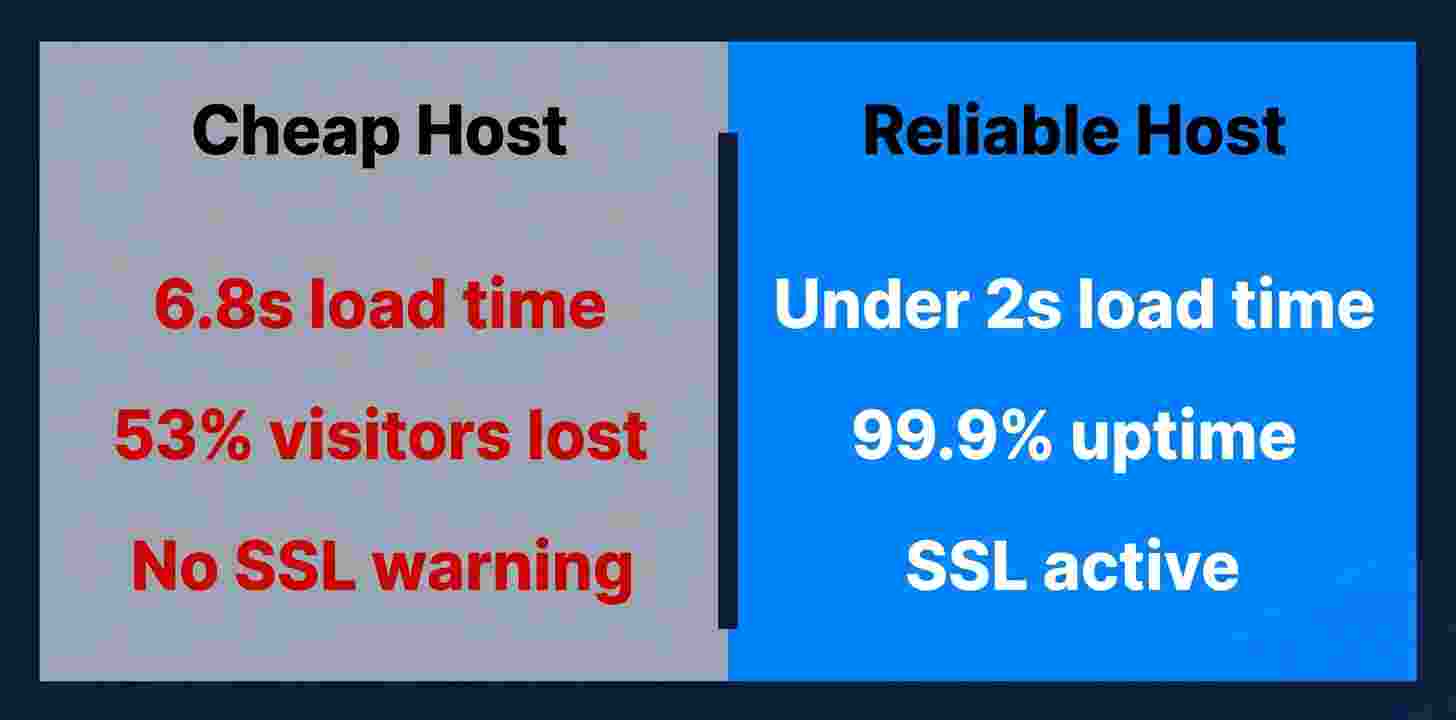
The real problem isn’t price. It’s the downstream cost of a bad decision. A site that loads in six seconds loses roughly 53% of mobile visitors before they see a single word of content — and in Nigeria, where over 80% of internet users are on mobile, that’s not a statistic to ignore. A site that goes down on a Saturday afternoon — when your Instagram ad is running and traffic is at its peak — loses money you’ll never recover. Worse, you may not even find out it was down until Monday.
I also wrote about the related issue in The Real Cost of a Free Website in Nigeria — and hosting is one of the biggest hidden costs embedded in that conversation. The cheapest starting point almost always creates the most expensive long-term problem.
The root cause isn’t ignorance. It’s a lack of clear, Nigeria-specific guidance on what to actually look for.
The “Cheapest Is Best” Myth That’s Quietly Killing Nigerian Websites
Here’s the belief I want to challenge directly: that the best hosting is the most affordable hosting. That if you can get a domain and hosting for ₦5,000 a year, that’s a win. That all servers are basically the same and you’re just paying for a brand name with the pricier options.
That belief is costing Nigerian businesses real money, every day.
Here’s what’s actually happening when you buy ₦2,000-a-year shared hosting from a provider with no transparent infrastructure: your website is sitting on a server with potentially hundreds — sometimes thousands — of other sites. When any of those sites experience a traffic spike, your site slows down too. You’re sharing CPU resources, RAM, and bandwidth with strangers you didn’t choose. There’s no SLA for uptime. Support is often a ticketing system that takes 72 hours to respond — if it responds at all.
The flip side of this isn’t that you need to spend ₦50,000 a month on a dedicated server. That’s not what I’m recommending. What I’m saying is that there’s a middle ground — reputable providers with proven infrastructure, actual uptime guarantees, free SSL, and WordPress-optimised servers — that cost between ₦15,000 and ₦60,000 a year. That price range is where reliability lives.
Think about it this way: if your website generates even one client per month — one ₦30,000 service, one ₦50,000 product sale — then the hosting cost is irrelevant. What’s not irrelevant is whether your site was actually live and loading fast when that client tried to find you. Cheap hosting that causes you to miss one client has already cost you more than a year of premium hosting would have.
The reframe is simple. Stop thinking about hosting as an expense. Start thinking about it as the floor your entire digital business stands on. If the floor is weak, everything built on it is unstable.
How the A.C.E. Framework Guides Every Hosting Decision I Make
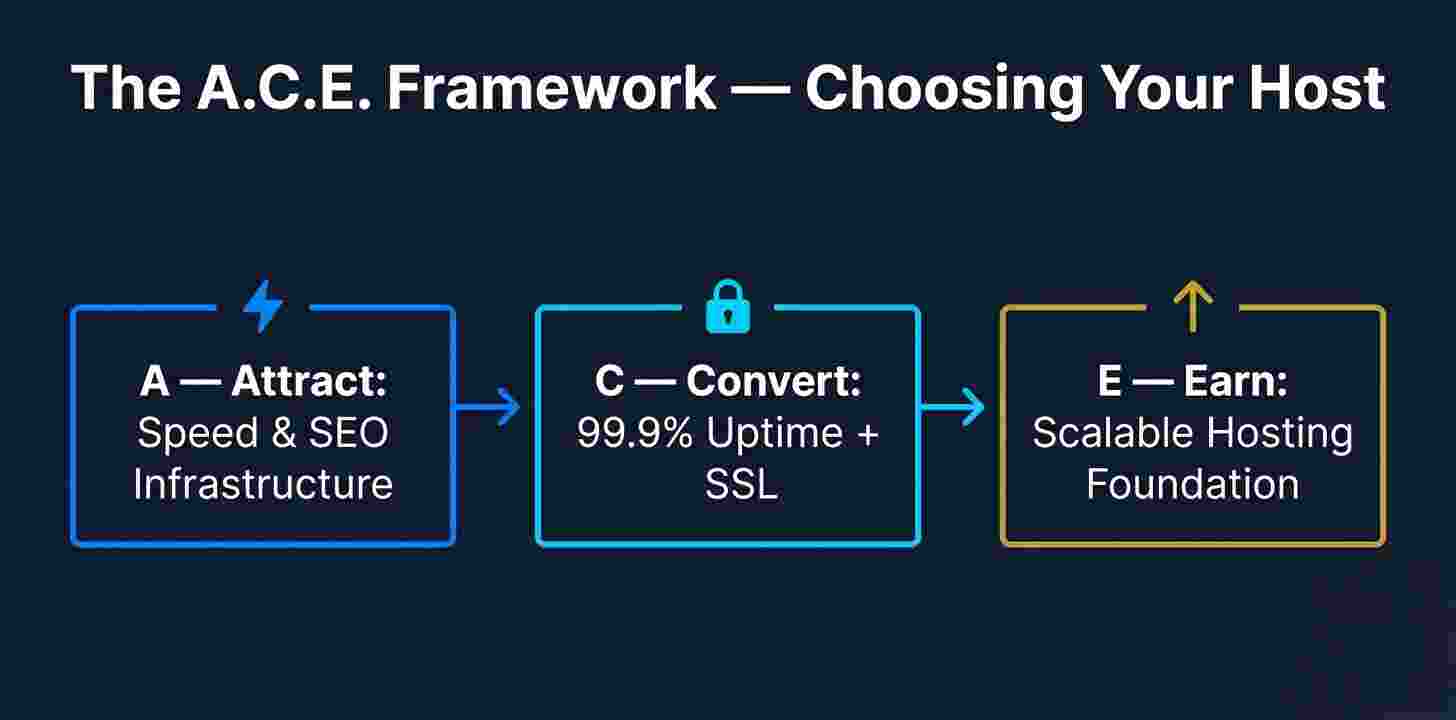
When I choose a hosting provider for a client site, I’m not just looking at price or storage. I’m running it through the same framework I apply to every digital asset I build: Attract, Convert, Earn. The A.C.E. Monetization Framework isn’t abstract strategy — it’s a practical filter that tells me whether a technical decision supports or undermines the business goal. Hosting is one of the most important technical decisions you’ll make, so this is exactly where the framework applies.
A — Attract: Does Your Hosting Help Google Find You?
Speed is a Google ranking factor. It has been since 2010 for desktop and since 2018 for mobile — and in a market where Nigerian entrepreneurs are competing for the same local keywords, page speed can be the difference between page one and page three. Google’s Core Web Vitals — which measure loading speed, visual stability, and interactivity — are direct ranking signals. A slow host suppresses all of them.
What this means practically: your hosting provider needs to be running modern infrastructure. SSD storage (not traditional hard drives). PHP 8+ support. HTTP/2 or HTTP/3 protocol. A content delivery network (CDN) option or integration. These aren’t luxury features — they’re what makes your site competitive in search. When I set up a WordPress site for a client, I want the hosting foundation to be doing as much SEO work as possible before we even touch a plugin.
The providers I recommend all share one characteristic in common on this point: they’re built on infrastructure that doesn’t fight your SEO efforts. They load fast out of the box, and they give you the tools to make them faster still.
C — Convert: Is Your Site Actually There When Someone Needs It?
Conversion is impossible on a site that isn’t live. It sounds obvious. But this is exactly what bad hosting does — it takes your site offline at unpredictable intervals, and most business owners have no monitoring in place to know when it happens. Your Instagram bio link is pointing to a site that returns a 500 error. Your Google Business listing sends someone to a blank white page. You’re running a paid ad to a URL that times out. All of that spend, wasted.
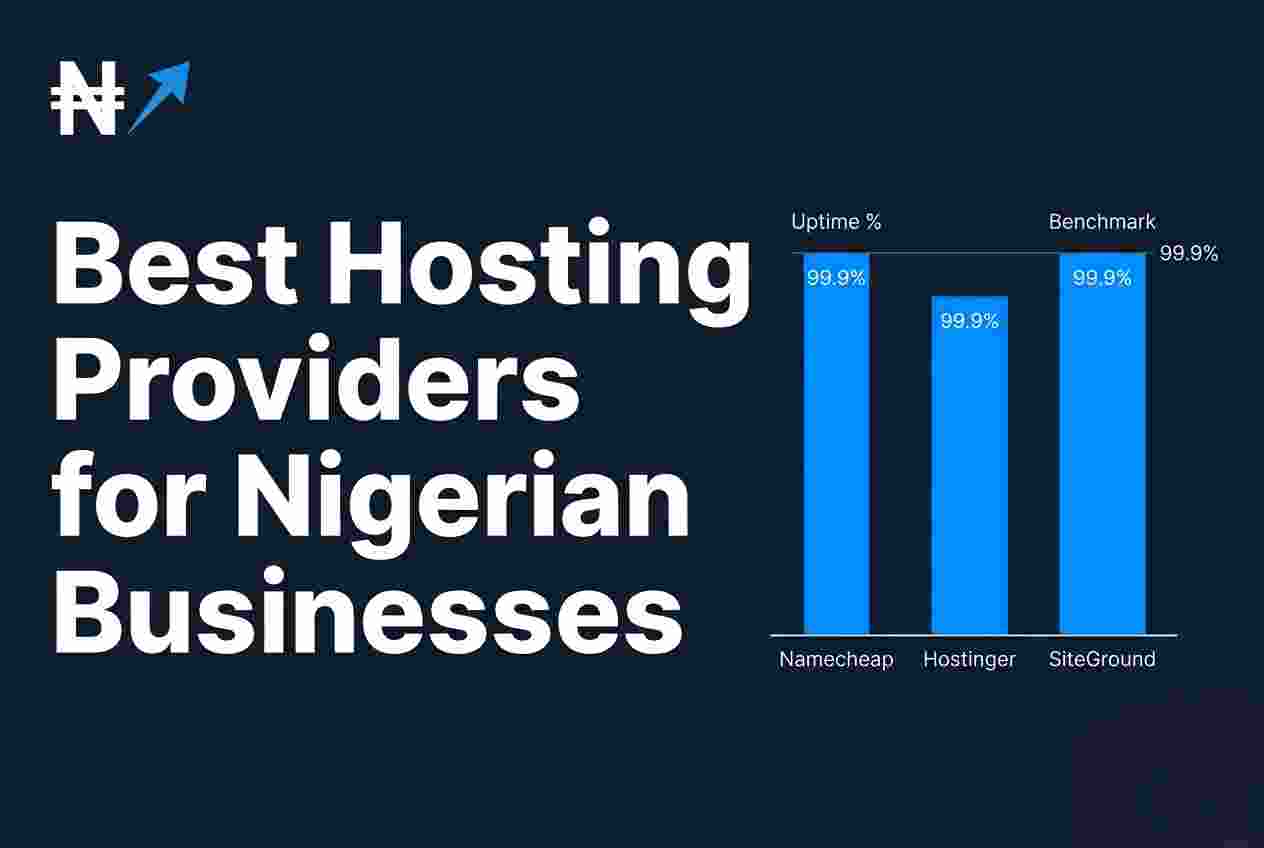
Uptime is non-negotiable. The threshold I set for any provider I recommend is 99.9% guaranteed uptime — which means no more than roughly eight hours of downtime per year, and even that’s more than I’d like. Beyond uptime, the hosting environment needs to support proper SSL installation (HTTPS), because Google Chrome now flags HTTP-only sites as “Not Secure” — and Nigerian users are becoming increasingly aware of that warning. A site flagged as insecure doesn’t convert. It repels.
Good hosting also gives you control — a proper cPanel or dashboard where you can manage your site, run backups, check resource usage, and install WordPress with one click. Control matters because when something goes wrong at 11 PM on a Thursday, you need to be able to fix it without waiting three days for a support ticket response.
E — Earn: Is Your Hosting Stable Enough to Build an Income On?
Every revenue stream you build online — whether that’s a service booking page, a digital product store, an affiliate blog, or a lead generation funnel — sits on your hosting. If the foundation is unreliable, the income is unreliable. It’s that direct.
I’ve seen Nigerian entrepreneurs invest in beautiful website designs, run effective paid ads, and build genuine audience — only to lose revenue because their hosting couldn’t handle a moderate traffic spike. A few hundred concurrent visitors shouldn’t crash a business website. But on the wrong shared plan, it will.
The earn stage of hosting is really about scalability. Your host needs to give you a clear upgrade path — from shared hosting to VPS, or from basic WordPress hosting to managed WordPress — without forcing you to migrate your entire site to a new provider. The best providers grow with you. You can check out our full range of services if you want help figuring out where you are in that journey and what upgrade makes sense right now.
What Happened When Sola’s Fashion Site Finally Got Stable Hosting
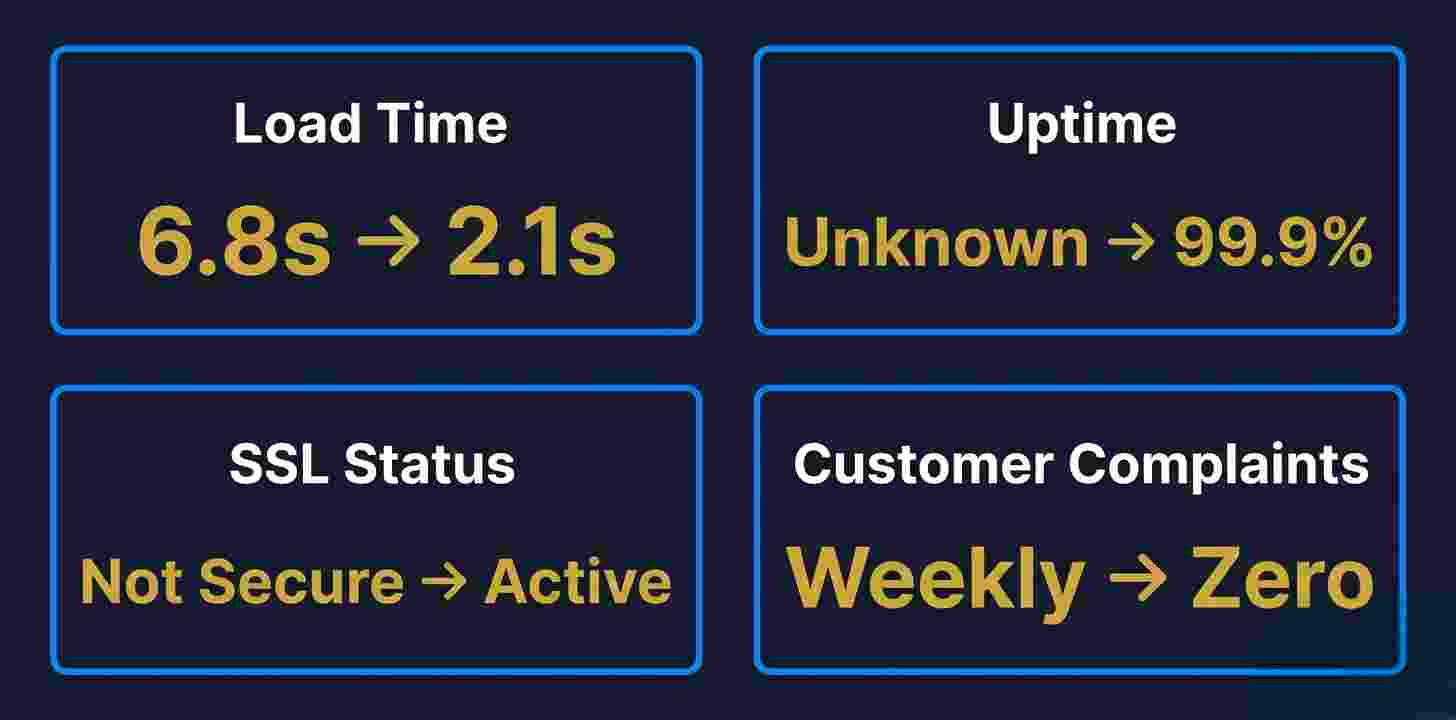
Sola runs a fashion retail business out of Lagos — ready-to-wear pieces, custom orders, and a growing social following that was sending real traffic to her website. On paper, everything looked good. In reality, her site was down more than it was live.
She’d built her site on a cheap local hosting plan — ₦3,500 a year — and for the first few months, it seemed fine. Then the complaints started. Customers would message her on WhatsApp saying the site wasn’t opening. She’d check on her own phone and it looked fine. What she didn’t know was that her host had throttled her resources because a neighbouring site on the same server was spiking. Her site was returning errors for some users, loading slowly for others, and displaying blank pages intermittently on mobile.
When she came to Ace Digitals Global, we audited the situation quickly. The diagnosis: wrong host, no SSL properly configured, no caching, and a server response time of over four seconds. We migrated her site to a recommended provider, configured SSL, set up caching via a WordPress plugin, and enabled a CDN. Load time dropped from 6.8 seconds to under 2.1 seconds. Uptime has been 99.9% since migration.
“I didn’t even know my site was down half the time. DigitalUche moved everything and my customers stopped complaining.” — Sola, Ace Digitals Global client
If your site is slow, unreliable, or you’re not even sure what host you’re on — let’s sort it out before it costs you another customer.
💬 Chat with DigitalUche on WhatsApp 🌐 Visit Ace Digitals Global
The Providers I Actually Use for Nigerian Client Websites
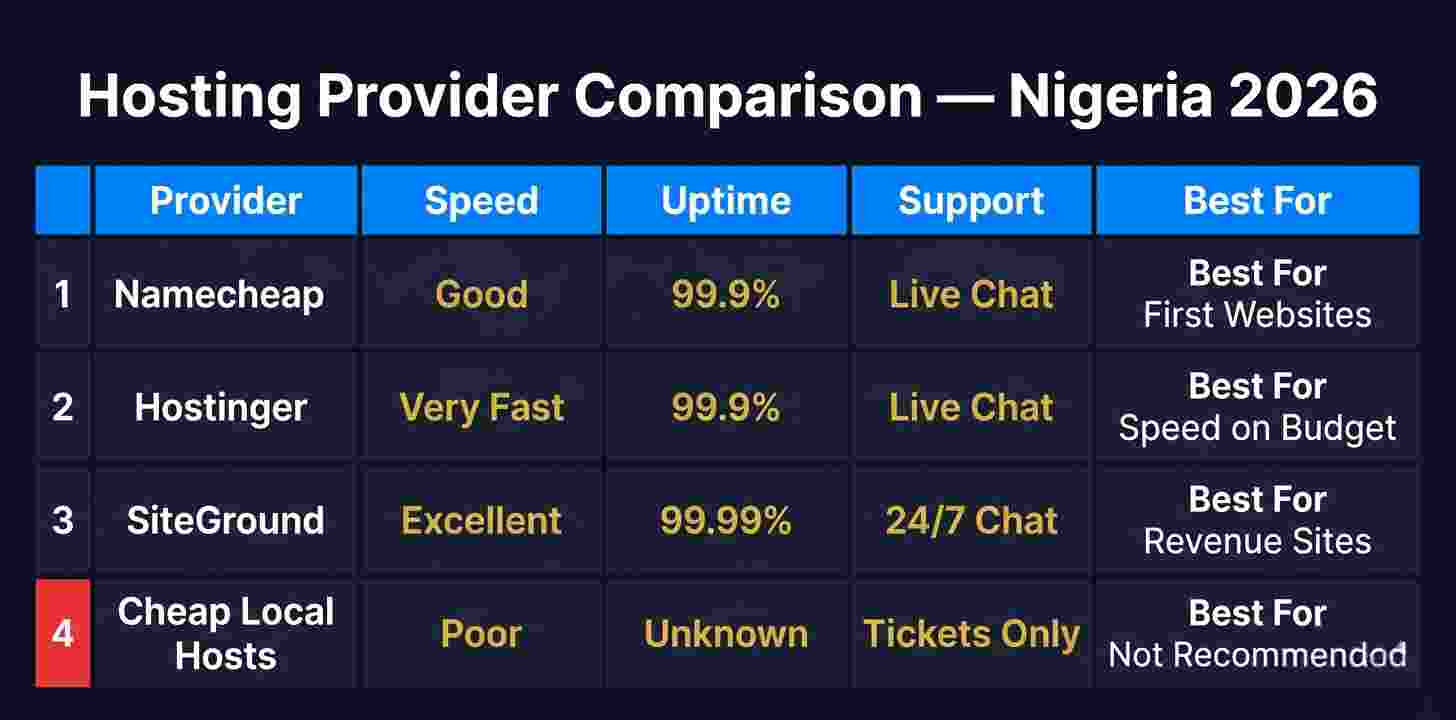
I’m not going to give you a list of twenty hosting companies with a paragraph copied from each one’s marketing page. That’s not useful. What I’m giving you instead is a shortlist of providers I’ve personally deployed on client projects, with honest notes on who each one is right for.
Namecheap — Best Entry-Level Option for Nigerian Entrepreneurs
Namecheap is where I send first-time website owners who need reliability without spending too much. Their Stellar shared hosting plan costs around $1.98/month (billed annually), which works out to roughly ₦3,000–₦4,000 per month at current exchange rates. For that, you get SSD storage, free SSL, cPanel access, and a one-click WordPress installer. Their uptime record is consistently above 99.9%, and their support — while not instant — is responsive via live chat. It’s not the fastest host I’ve used, but it’s honest, stable, and far better than the ₦2,000/year local providers I see causing problems. If you’re building your first serious website and you want a dependable foundation, start here.
Hostinger — Best for Speed on a Budget
Hostinger has quietly become one of the most impressive budget hosts available to Nigerian entrepreneurs. Their infrastructure runs on LiteSpeed servers — which are measurably faster than the Apache servers most cheap hosts use — and their hPanel (their custom dashboard) is cleaner and easier to use than traditional cPanel. Their Premium Shared Hosting plan offers daily backups, free SSL, and a CDN integration. I’ve used Hostinger for several client sites where speed was a priority and budget was a constraint, and load times consistently came in under two seconds with proper caching configured. They accept card payments internationally, which Nigerian users can manage through virtual dollar cards from Opay, Flutterwave, or similar platforms.
SiteGround — Best for WordPress Performance
SiteGround is the host I recommend when a client’s website is central to their revenue and they need it to perform without compromise. It’s not the cheapest — their GrowBig plan runs around $3.99/month on renewal — but it comes with managed WordPress updates, daily backups, a proprietary caching system, and a CDN built in. SiteGround’s server response times are among the best I’ve tested for WordPress sites. Their support is genuinely excellent: 24/7 live chat with agents who understand WordPress, not just generic ticket responses. If you’re running an e-commerce store, a booking platform, or any site where downtime directly translates to lost revenue, SiteGround is worth every naira.
For more on building a digital presence that turns visitors into paying customers — not just traffic — the post on How to Monetize Social Media in Nigeria in 2026 is worth reading alongside this one. Hosting and monetization strategy go hand in hand more than most people realise.
| Provider | Uptime | Speed | Free SSL | Support | Best For |
|---|---|---|---|---|---|
| Namecheap | 99.9% | Good | ✓ | Live chat | First websites |
| Hostinger | 99.9% | Very fast | ✓ | Live chat | Speed on budget |
| SiteGround | 99.99% | Excellent | ✓ | 24/7 live chat | Revenue-critical sites |
| Cheap local hosts | Unknown | Poor | ✗ | Tickets only | Not recommended |
Hosting Mistakes Nigerian Business Owners Make (And What They Cost)
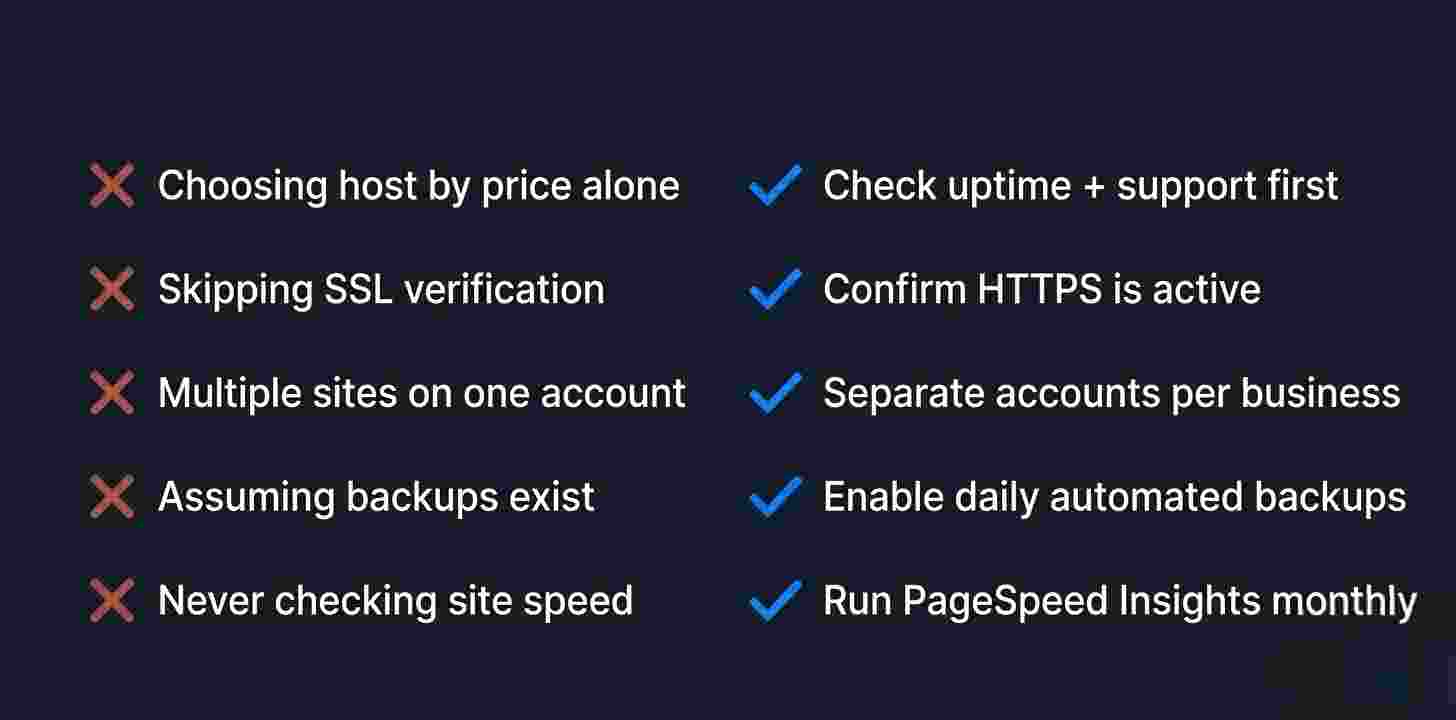
Mistake 1: Choosing a host based on the annual price tag alone. A ₦2,500/year plan feels like a smart decision until the site goes down on a Friday afternoon and there’s no support to call. The real cost of cheap hosting isn’t measured in naira per year — it’s measured in revenue lost to downtime, customers who left and didn’t come back, and the time spent trying to fix problems that better infrastructure wouldn’t have created.
Mistake 2: Not verifying that SSL is actually installed and active. Most hosts include free SSL now, but “included” doesn’t always mean “automatically configured.” I’ve audited Nigerian business sites that had SSL listed as a feature in their plan but were still serving pages over HTTP. Modern browsers flag these as insecure. Visitors see a warning. They leave. Check your URL — it should start with https://, not http://.
Mistake 3: Using one hosting account for multiple business-critical sites. If you’re running your main business site, a client’s site, and a second brand on a single shared hosting account, you’re one bad neighbour or one traffic spike away from all three going down simultaneously. Separate accounts for separate business assets aren’t a luxury — they’re basic risk management.
Mistake 4: Skipping backups entirely. Most business owners assume their hosting provider is backing up their site. Some are. Many aren’t — or they’re keeping backups so infrequently that a restore would cost you weeks of content. Set up daily automated backups. It costs almost nothing. It saves everything when something goes wrong. You can browse digital products and resources for WordPress setup guides that cover this step in detail.
Mistake 5: Never checking their site speed. Most website owners have never run their own site through Google PageSpeed Insights or GTmetrix. They have no idea whether their site loads in 1.8 seconds or 8.3 seconds. Speed is revenue. Run the test. Know your number. Then fix it — starting with the host.
This Is What Your Website Looks Like When the Foundation Is Right
Picture this. Your Instagram bio link loads in under two seconds on any phone. The customer who finds your Google Business listing at 9 PM on a Sunday lands on a site that opens cleanly, displays properly, and feels professional — because it is professional. Your paid ad sends fifty people to your landing page on a Tuesday evening, and the server handles all fifty without blinking. Your SSL certificate is active. Your backup ran last night at 2 AM without you doing anything.
You stop getting WhatsApp messages from customers saying “your site no dey open.” You stop having to apologise for a broken link in your bio. You stop wondering why your Google rankings aren’t moving despite good content — because now the technical foundation isn’t fighting your SEO work, it’s supporting it.
Your business is live 99.9% of the time. Every naira you spend on ads is landing on a site that’s actually there to receive it. Every piece of content you publish is sitting on infrastructure that loads it fast and serves it reliably.
That’s not a premium outcome reserved for big brands. That’s what proper hosting does for every business that uses it. And it costs less than most people think. If you want to get in touch, we can walk through what the right setup looks like for your specific situation.
Ready to Stop Doing This Alone?

You’ve read what the right hosting looks like. You know the mistakes to avoid and the providers worth trusting. But knowing this and implementing it are two different things — and most business owners don’t have the time, the technical confidence, or the patience to do a full hosting audit, migration, SSL configuration, caching setup, and speed optimisation on their own.
That’s exactly what we handle at Ace Digitals Global. Done for you. No guesswork. No downtime during migration. No three-day wait for a support ticket that never resolves the actual problem.
Stop letting bad hosting quietly kill your business. Let’s build a site that’s actually live, fast, and working for you.
One conversation. Clear plan. Proper foundation — done.
💬 Chat with DigitalUche on WhatsApp 🌐 Visit Ace Digitals Global 📸 Follow @DigitalUche
Frequently Asked Questions
What is the best web hosting for small businesses in Nigeria?
For most Nigerian small businesses starting out, Namecheap’s Stellar plan or Hostinger’s Premium Shared Hosting offer the best combination of reliability, speed, and price. Both provide free SSL, SSD storage, cPanel or equivalent dashboard access, and one-click WordPress installation. If your website is a primary revenue channel — generating bookings, product sales, or leads — SiteGround’s GrowBig plan is worth the higher cost for its managed WordPress features and superior uptime record. The right choice depends on how critical your website is to your daily revenue.
How much does web hosting cost in Nigeria in 2026?
Reliable web hosting for Nigerian businesses typically costs between ₦15,000 and ₦80,000 per year, depending on the provider and plan. Budget providers like Namecheap and Hostinger sit at the lower end of that range, while premium managed WordPress hosts like SiteGround cost more but include features like daily backups, built-in CDN, and managed updates. Avoid plans priced under ₦5,000 per year — at that price point, the infrastructure quality rarely meets the uptime and speed standards a serious business website needs.
Which hosting provider is fastest for Nigerian websites?
Based on my experience building Nigerian client websites, Hostinger consistently delivers the fastest load times in the budget category, thanks to its LiteSpeed server infrastructure and built-in CDN. SiteGround leads in the premium category with its custom caching system and global server network. Speed also depends heavily on how your WordPress site is configured — caching plugins, image optimisation, and CDN setup all compound the hosting performance. A fast host with no caching still won’t beat a well-configured site on an average host.
Is Namecheap good for Nigerian websites?
Yes — Namecheap is one of the providers I regularly recommend for Nigerian business websites, particularly for first-time owners and small businesses. Their shared hosting plans include free SSL, SSD storage, 99.9% uptime guarantees, and reliable live chat support. They accept international card payments, which Nigerian users can access through virtual dollar cards from platforms like Opay or Grey. The main limitation is that their entry-level plans can slow down under high traffic — if your site is growing quickly, plan to upgrade to their VPS hosting or migrate to SiteGround.
What should I look for in a hosting provider in Nigeria?
The five things I always check before recommending a host: uptime guarantee of at least 99.9%, SSD storage (not traditional hard drives), free SSL included and auto-renewing, 24/7 support accessible via live chat (not just email tickets), and a clear upgrade path from shared to VPS or managed hosting. Nigerian-specific considerations also include whether the provider accepts payment methods accessible locally and whether their server locations support fast load times for West African users — a CDN can offset geographic distance significantly.
What’s the difference between shared hosting and VPS hosting for Nigerian businesses?
Shared hosting means your website sits on a server alongside many other websites, sharing the same CPU, RAM, and bandwidth resources. It’s affordable and works well for low-to-medium traffic sites. VPS (Virtual Private Server) hosting gives your site its own dedicated portion of a server — more resources, better performance, and isolation from other users’ traffic spikes. Nigerian businesses running e-commerce stores, high-traffic blogs, or booking platforms should consider VPS when their shared hosting begins showing performance strain. Ace Digitals Global can help you assess which tier your business currently needs — get in touch and we’ll walk through it together.
Can Ace Digitals Global handle my website hosting setup?
Yes — this is one of the core services we offer. We handle everything from selecting the right hosting provider for your specific needs, registering your domain, installing and configuring WordPress, setting up SSL, configuring caching and a CDN for speed, and running an initial speed optimisation. If you’re migrating from an existing host, we manage the migration with no downtime. It’s a fully done-for-you service, and it’s one of the fastest ways to transform how your website performs. Start the conversation on WhatsApp and we’ll tell you exactly what’s needed for your situation.
Your Website Deserves Better Than a ₦2,000 Gamble
Hosting is not glamorous. You can’t show it to clients. You can’t post it on Instagram. It sits quietly in the background — and that’s exactly why it gets neglected. But everything you’re building online — your brand, your content, your offers, your ads — is only as reliable as the foundation it sits on. Choose a host that matches the ambition of what you’re building, not just the minimum cost you can justify.
The providers I’ve covered here — Namecheap, Hostinger, SiteGround — aren’t the only good options in the world. But they’re the ones I’ve tested, used for real client work, and stood behind when something went wrong. They deliver on what they promise. That’s not a low bar — in this industry, it’s actually rare.
Your next customer is searching for you right now. Make sure your site is actually there when they arrive.
Ready to build on a foundation that actually holds?
Talk to DigitalUche — we’ll set up your hosting, domain, and WordPress site the right way from day one.
💬 Chat with DigitalUche on WhatsApp 🌐 acedigitalsempire.com 📸 @DigitalUche
A slow website doesn’t just frustrate visitors — it tells them everything they need to know about how you run your business.
Want This Implemented for Your Business?
Book a free 30-minute strategy call with DigitalUche — no obligation, just real advice.

Uchenna Richard — DigitalUche
Founder & CEO — Ace Digitals Global
Lagos-based digital marketing strategist helping Nigerian entrepreneurs build websites and run ads that actually convert. Follow on Instagram @DigitalUche.