
Your website loads fine. It looks sharp on mobile. Somebody even complimented the colours in your DMs last week. And it still hasn’t sent you one single paying customer this month.
That’s the gap nobody warns you about before you pay for a site: the distance between ‘it exists’ and ‘it earns.’ Most Nigerian business websites are digital brochures wearing a sales tool’s clothes — they list services, show a logo, maybe a contact form nobody fills. If you want to turn your website into a money machine, that stops being optional. It becomes the entire point.
I’ve watched this play out with real businesses. Tested International Services ran on flyers and word of mouth for years before their site started pulling 20 to 30 enquiries a week. D Amafoju had an Instagram following and boosted posts — then proper ads through a built-for-sales website pushed past 1,096 orders. Same internet. Different machine.
This guide shows you exactly what separates the two — and what to change on yours first.
Why Your Website Gets Traffic but No Sales
Here’s the mistake: you built a website because everyone said you needed one. You paid ₦150,000 to ₦400,000 for a designer, posted the link on Instagram, maybe ran a boost or two. Then you waited. Nothing came.
That’s not a website problem. That’s a strategy problem wearing a website’s clothes. D Amafoju, a bespoke ladies’ fashion house, spent over a year boosting Instagram posts before working with us — effort every week, almost nothing to show for it in trackable orders. A website without a conversion path does the same thing: it displays your business instead of selling it.
Conversion path: the specific sequence a visitor follows from landing on your website to taking a paid action — viewing a product, filling a form, or messaging you on WhatsApp — without getting lost or distracted along the way.
If your site has no conversion path, it doesn’t matter how it looks. It’s a brochure with a domain name.
Why Do Nigerian Business Websites Still Fail to Make Money?
The problem persists because most website owners were sold a brochure, not a sales system. Web designers get paid once the site goes live — nobody’s incentive is tied to whether it generates a single lead afterward. That’s the gap: you paid for ‘presence,’ not performance.
Add to that the mindset most Nigerian entrepreneurs inherit — build the site, post the link once, wait. No lead capture, no clear offer, no follow-up sequence. Tested International Services ran on flyers and word of mouth for years before Ace Digitals Global rebuilt their website with proper structure and paired it with ads. Within two months, they were getting 20 to 30 enquiries weekly and closed visa procurement for over 13 people. That’s not luck — that’s a site built to do a job.
Most sites skip that job entirely. For deeper structural fixes, see our Website Redesign Checklist in Nigeria.
How the A.C.E. Framework Turns a Website Into a Money Machine
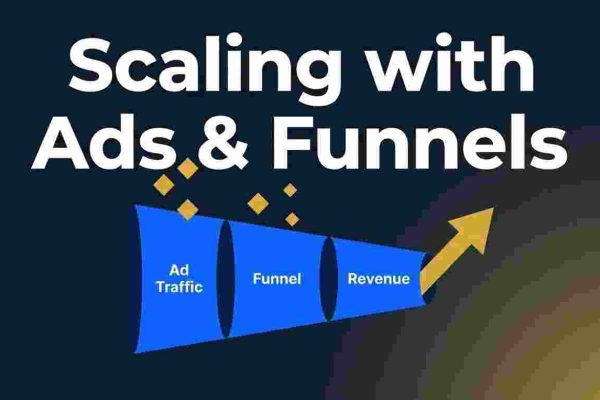
A website that makes money isn’t luckier than yours — it’s built on a sequence. We call it the A.C.E. Monetization Framework: Attract the right traffic, Convert that traffic into leads, Earn from the relationship. Skip a stage and the whole thing collapses, which is exactly what’s happening on most Nigerian business sites right now.
Attract
This stage decides who even lands on your site. Tested International Services (TIS) used to rely on flyers passed hand to hand. Once we built their website and paired it with targeted ads, they moved from zero digital visibility to 20-30 enquiries every week within two months — and processed visas for more than 13 people in that window. That’s what attracting the right traffic looks like, not just more traffic.
Convert
Traffic without conversion is just visitors scrolling past. Straddle Homes never had a website until we built one before they even opened for business — and their enquiries climbed to 150-300 in peak months because the site was structured to capture interest immediately, not just display listings.
Earn
This is where the money shows. D Amafoju’s fashion house stopped boosting posts and started running proper Meta Ads instead — generating over 1,096 orders from roughly ₦1,012,500 in spend. That’s the Earn stage working exactly as designed.
Five Steps That Turn a Nigerian Business Website Into a Revenue Engine
Most Nigerian business websites are digital brochures. They look presentable, they load (eventually), and they tell visitors what the business does. That’s where the job ends. No clear path to buy, no reason to trust, no mechanism to follow up. The gap between effort and result isn’t a mystery — it’s a structural problem. Here’s how to fix it, step by step.
Step 1: Lock Down Your One Core Offer
A website that tries to sell everything sells nothing. Before you touch design or copy, get ruthlessly clear on the single action you want a visitor to take — book a call, request a quote, send a WhatsApp message, place an order. Every page, every button, every headline serves that one action. When Straddle Homes launched with a website Ace Digitals Global built before they even started operations, the site was structured around one outcome: property enquiries. The result? 150 to 300 enquiries in peak months, with numbers growing week after week across the website and social media. Clarity of purpose precedes volume of results.
Step 2: Write Copy That Sells, Not Copy That Describes
Your homepage isn’t a company profile. It’s a sales conversation. Lead with the problem your customer has, follow with what changes when you solve it, and end with a specific call to action. ‘We offer professional travel consulting services’ is a description. ‘We get your visa approved and your travel booked — fast’ is a promise. That distinction is everything. If you want to go deeper on what makes Nigerian website copy actually convert, the breakdown at Website Copywriting in Nigeria: What Actually Sells (2026) covers the exact structure that works for local audiences.
Step 3: Build Trust Before You Ask for Anything
Nigerian buyers are skeptical by design. They’ve been burned. Your website has maybe eight seconds to signal legitimacy before they’re gone. That means: a real phone number in the header, WhatsApp access one click away, photos of actual work or an actual team, client results with names attached, and social proof that doesn’t read like it was written by the business itself. Bamgboye Similoluwa put it plainly after Ace Digitals Global ran ads for his business: ‘I’ve gotten increase in my clientele since after their ads and we have been doing more ads ever since.’ That kind of specific, sourced proof on a website does more for conversion than any design element.
Step 4: Connect Paid Traffic to a Page That’s Built to Receive It
Sending ad traffic to your homepage is one of the most common and expensive mistakes Nigerian business owners make. A homepage is for orientation. A landing page is for conversion. They are not the same thing. When Ace Digitals Global ran proper Meta Ads — not post boosting — for D Amafoju, a bespoke ladies’ fashion house, the traffic went to pages built to convert. Over one year, that produced more than 1,096 orders at an average cost of ₦1,074.16 per messaging conversation, spending as little as ₦4,500 per day from a total ad spend of over ₦1,012,500. The ads didn’t work because the budget was large. They worked because the destination was built to receive the traffic.
Here’s how common traffic strategies compare for Nigerian businesses at test-budget scale:
| Traffic Source | Minimum Test Budget (₦/day) | Best For | Main Risk |
|---|---|---|---|
| Meta Ads (proper campaigns) | ₦4,500 – ₦10,000 | Lead gen, DMs, sales | Wrong objective kills ROI |
| Instagram Post Boosting | ₦1,500 – ₦5,000 | Awareness only | No conversion data, low intent |
| Google Search Ads | ₦8,000 – ₦20,000 | High-intent buyers searching now | Keyword mismanagement wastes spend |
| Organic SEO | ₦0 (time cost only) | Long-term traffic, trust-building | 3–6 months before visible results |
| WhatsApp Broadcast | ₦0 – ₦2,000 | Warm leads, repeat buyers | Needs existing list to work |
Illustrative example: A Lagos-based travel consultancy wants more visa enquiries. The offer is a ₦35,000 visa consultation package. Campaign objective: Messages (WhatsApp). Destination: a focused landing page with one form and a WhatsApp button — not the homepage. Ad creative: a short video of a satisfied client holding their approved visa, with copy that addresses the fear of rejection. Test budget: ₦6,000/day for 7 days (₦42,000 total). Metrics to watch — cost per initiated conversation (target: under ₦2,500), conversation-to-consultation rate (anything above 15% is healthy at this stage), and ultimately, consultations booked. If cost per conversation exceeds ₦3,500 after day four, pause and test a new creative angle before scaling. This mirrors the structure behind what Tested International Services achieved when Ace Digitals Global built their site and launched ads: 20 to 30 enquiries every week within two months, leading to visa procurements for more than 13 people in that period.
Step 5: Set Up the Follow-Up System Before You Run Traffic
Most Nigerian business websites lose leads not at the enquiry stage, but after it. Someone fills a form or sends a WhatsApp message and hears nothing for 18 hours. That lead is gone. A revenue-generating website isn’t just a front end — it’s connected to a follow-up process: an instant WhatsApp auto-reply that acknowledges the enquiry, a CRM or even a simple spreadsheet log, and a human response within two hours during business hours. The website brings them in. The system keeps them. For a full picture of how this fits into a broader digital strategy, Digital Marketing Strategy Nigeria: What Actually Works lays out how the pieces connect. If you’re rebuilding an existing site rather than starting from scratch, the Website Redesign Checklist in Nigeria: Keep Your Rankings will make sure you don’t trade traffic for aesthetics in the process.
These five steps aren’t theory. They’re the operational difference between a website that exists and one that earns. The A.C.E. Framework — Attract, Convert, Earn — is exactly this sequence applied systematically: you build the traffic engine, you engineer the conversion, and then the income becomes predictable rather than accidental. If you want that applied to your business specifically, chat with us on WhatsApp and tell us where your site is currently falling short.
What a Revenue-Generating Website Actually Does Differently
Most Nigerian business websites share the same problem: they were built to exist, not to work. The design looks decent, the logo is there, the contact details are somewhere at the bottom — and that is the entire strategy. The site sits. Traffic arrives and leaves. Nobody calls. Nobody fills the form.
The gap between a brochure site and a revenue engine is not the design. It is the system behind it.
Here is a pattern that shows up across every client who has moved from zero leads to consistent enquiries: their old website was built around what they do. Their new one is built around what the visitor needs to decide. That single shift changes everything — the copy, the page structure, the calls to action, the offers, even the way the phone number is displayed.
Conversion Architecture: The deliberate arrangement of page elements — headlines, trust signals, offers, and calls to action — in a sequence designed to move a visitor toward one specific action. It is not about aesthetics; it is about decision-making psychology applied to every scroll depth on every device.
When Ace Digitals Global built the website for Tested International Services, a travel and immigration consultancy that had been relying on word of mouth and handing out flyers, the outcome within 2 months was 20 to 30 enquiries every week — and more than 13 successful visa travels processed in that same period. Nothing about their service changed. What changed was that their website now did the qualifying and persuading before a prospect ever picked up the phone.
Straddle Homes had no website at all before Ace Digitals Global built one before their operations even launched. Property enquiries climbed week after week across their website and social media, reaching between 150 and 300 enquiries in peak months. The website was not decoration — it was the front door to a business that had not yet opened it.
The deeper truth most people miss: a website does not generate leads by existing. It generates leads by handling objections, building trust, and presenting a single clear next step — before the visitor gets distracted, before the data runs out, before they open the next tab. On a mobile-first Nigerian audience browsing on 4G with four other tabs open, you have one scroll to earn the next one. Website Copywriting in Nigeria: What Actually Sells (2026) breaks down exactly how that copy needs to be structured to hold attention and push decisions.
The sites that consistently earn are not the prettiest ones. They are the ones with a clear traffic source feeding them, a structured offer waiting for visitors, and a follow-up system that does not let warm leads go cold. That is the full picture — and it maps directly to the three stages of the A.C.E. Framework: Attract the right people, Convert their attention into action, and Earn consistently from the relationship. For a deeper look at how this connects to your overall strategy, Digital Marketing Strategy Nigeria: What Actually Works is worth reading alongside this post.
Six Mistakes That Turn a Nigerian Business Website Into a Digital Graveyard
Most Nigerian business websites aren’t broken. They’re just built for the wrong job. They look clean enough on mobile, they load, they have a phone number somewhere — and they do absolutely nothing. If your site has traffic but zero leads, one of these six mistakes is almost certainly why.
1. No Clear Offer Above the Fold
Your homepage has about four seconds before a visitor decides whether to stay or bounce. If those four seconds show a generic welcome message and a stock photo, they’re gone. The fix is simple: state exactly who you help, what you help them do, and what they should click next — all visible without scrolling.
2. Calls to Action That Ask for Nothing Specific
‘Contact Us’ is not a call to action. It’s a suggestion. Visitors don’t act on vague directions — they act when they know exactly what happens after they click. Replace every soft CTA with something that names the outcome: ‘Get Your Free Website Audit,’ ‘Request a Quote in 2 Minutes,’ ‘Chat With Us on WhatsApp Now.’ That specificity is what separates a page that converts from one that doesn’t.
3. Copy Written for the Owner, Not the Buyer
Walk through most Nigerian business websites and you’ll find pages full of ‘We are a leading provider of…’ and ‘Our mission is to deliver excellence…’ Nobody who lands on your site cares about your mission statement. They care about their problem. Rewrite every page around what the visitor is trying to solve, not what you want them to know about you. That shift alone changes how a site performs. Check out Website Copywriting in Nigeria: What Actually Sells (2026) — the difference in conversion rates between owner-focused and buyer-focused copy is not subtle.
4. No Lead Capture Between ‘Visitor’ and ‘Ready to Buy’
Most people who land on your site aren’t ready to buy right now. That doesn’t mean they never will. But if your site has no way to capture their details — no lead magnet, no WhatsApp opt-in, no ‘get a free quote’ form — you lose them permanently the moment they close the tab. Tested International Services used to rely on flyers and word of mouth. Once Ace Digitals Global built their site and set up proper lead capture alongside targeted ads, they went from near-zero inbound to 20–30 enquiries every week and processed visa travel for more than 13 clients in just two months. The website didn’t just look better — it worked.
5. Speed and Mobile Experience Treated as Optional
Nigeria is a mobile-first market. Your visitors are on 4G, sometimes 3G, and they’re not waiting six seconds for your hero image to load. A slow, clunky mobile experience isn’t just annoying — it kills trust before a single word is read. Google’s own data shows that as page load time goes from one second to five seconds, bounce probability jumps by 90%. Compress your images, cut unnecessary scripts, and test your site on a mid-range Android device before you call it done. Website Redesign Checklist in Nigeria: Keep Your Rankings covers the exact technical items worth auditing before and after any site changes.
6. No Connection Between the Website and the Sales Process
This is the one most people miss entirely. A website that isn’t plugged into a real follow-up system — WhatsApp sequences, email, retargeting ads, a CRM — is just a brochure with a URL. Straddle Homes had no website at all when they came to Ace Digitals Global. The site was built before the business officially launched, and it was built as part of a full acquisition system, not as a standalone asset. The result: property enquiries that now reach 150–300 per month in peak periods, growing week on week across both the website and social channels. That doesn’t happen by accident. It happens when the site is designed to feed a process, not sit beside one. A solid Digital Marketing Strategy Nigeria: What Actually Works is what ties the website into everything else.
Proof: What a Website Built to Sell Actually Produces in Nigeria
Tested International Services ran on word of mouth and flyers handed out one person at a time. Two months after Ace Digitals Global built their website and launched Meta ads, they were taking 20 to 30 enquiries every week — and procured visa travel for more than 13 people inside that same window.
Straddle Homes had no website at all when we built theirs, before they even began operations. Property enquiries now climb week after week across the site and social media, reaching 150 to 300 in peak months.
D Amafoju, a bespoke ladies’ fashion house that spent years boosting Instagram posts, switched to proper Meta Ads — not boosting. Over one year: 1,096+ orders, ₦1,012,500 in ad spend, campaigns running from as little as ₦4,500 per day, at ₦1,074.16 per messaging conversation.
None of that came from a prettier homepage. It came from pages built to close. If yours is still a brochure, work through our Website Redesign Checklist in Nigeria: Keep Your Rankings before you touch the design.
This Could Be Your Story Next
Chinedu, Blessing and Tunde didn't start with an advantage. They started with a system. Let's build yours — message us today and tell us where your business is stuck.
Frequently Asked Questions About Turning a Nigerian Website Into a Money Machine
How much does it cost to build a money-making website in Nigeria?
Costs vary by scope, but in our experience a basic brochure site starts around ₦150,000, while a full conversion-focused build — copywriting, lead capture, tracking — typically runs ₦400,000 to ₦800,000. The price gap isn’t design. It’s strategy, as explained in Website Copywriting in Nigeria: What Actually Sells (2026).
Can a website generate sales without running paid ads?
Yes, through SEO and consistent content it can, though it usually takes three to six months to rank for relevant Nigerian search terms. Paid ads speed up enquiries, but a site built to convert will still earn organic traffic over time if the offer and copy are clear.
What’s the difference between a website and a sales funnel?
A website displays your business; a sales funnel moves a visitor through a sequence — attract, convert, earn — toward one specific action, like booking a call or placing an order. Most Nigerian business sites stop at display. See Digital Marketing Strategy Nigeria: What Actually Works for the full build-out.
How long before a revenue-focused website shows results?
In our experience, businesses that fix their offer, copy, and tracking start seeing enquiries within four to eight weeks, depending on traffic source. SEO gains compound further after month three. These are practical timelines from client work, not guarantees — your sales process still matters.
How do I get started with Ace Digitals Global?
Start by messaging DigitalUche directly — chat with us on WhatsApp and tell us exactly where your website is stuck. Or browse our full range of services to see what fits your business right now.
Your Next Move, Not Another Redesign
Your website isn’t a brochure you pay for once and forget. Built right, it’s the only member of your team that sells while you sleep, answers questions at 2am and keeps working the months you don’t post. The steps, the mistakes, the framework — they’re all above, and none of them need a bigger budget than you already burn on ads you don’t measure.
Start with one thing today: the offer on your homepage. Not the logo. Not the redesign. The offer. Then build the strategy around it.
Keep reading, keep tweaking, keep waiting — that’s the trap. A website that doesn’t sell isn’t a website. It’s a receipt.
Ready to Stop Guessing?
You don't need another course or another random tactic. You need the A.C.E. system applied to your business. One conversation is all it takes to start.
Want This Implemented for Your Business?
Book a free 30-minute strategy call with DigitalUche — no obligation, just real advice.

Uchenna Richard — DigitalUche
Founder & CEO — Ace Digitals Global
Lagos-based digital marketing strategist helping Nigerian entrepreneurs build websites and run ads that actually convert. Follow on Instagram @DigitalUche.